
The Ohio State University adopted the nickname the Buckeyes in 1950. Our state made the Ohio Buckeye (Aesculus glabra) the official state tree in 1953. Yet it was during the presidential election of 1840 that the whole nation began to associate Buckeyes with Ohio.
Incumbent Martin Van Buren insulted his opponent from Ohio, William Henry Harrison, saying he was “better suited to sitting in his log cabin drinking hard cider.” Harrison ran with it, called himself “the log cabin candidate,” and used a cabin built out of Buckeye timbers as his campaign gimmick. Harrison won the election.
Buckeye trees were once more prevalent across the state. Native tribes crushed the nuts to poison fish…an easy way to catch dinner. Settlers found the smooth, light wood easy to work into cabins, yokes, and tool handles. The entire plant is toxic if eaten and the leaves have an unpleasant odor when crushed. Landowners may have eradicated them to protect their livestock. However, this fact also makes them less likely to be eaten by deer or rabbits.
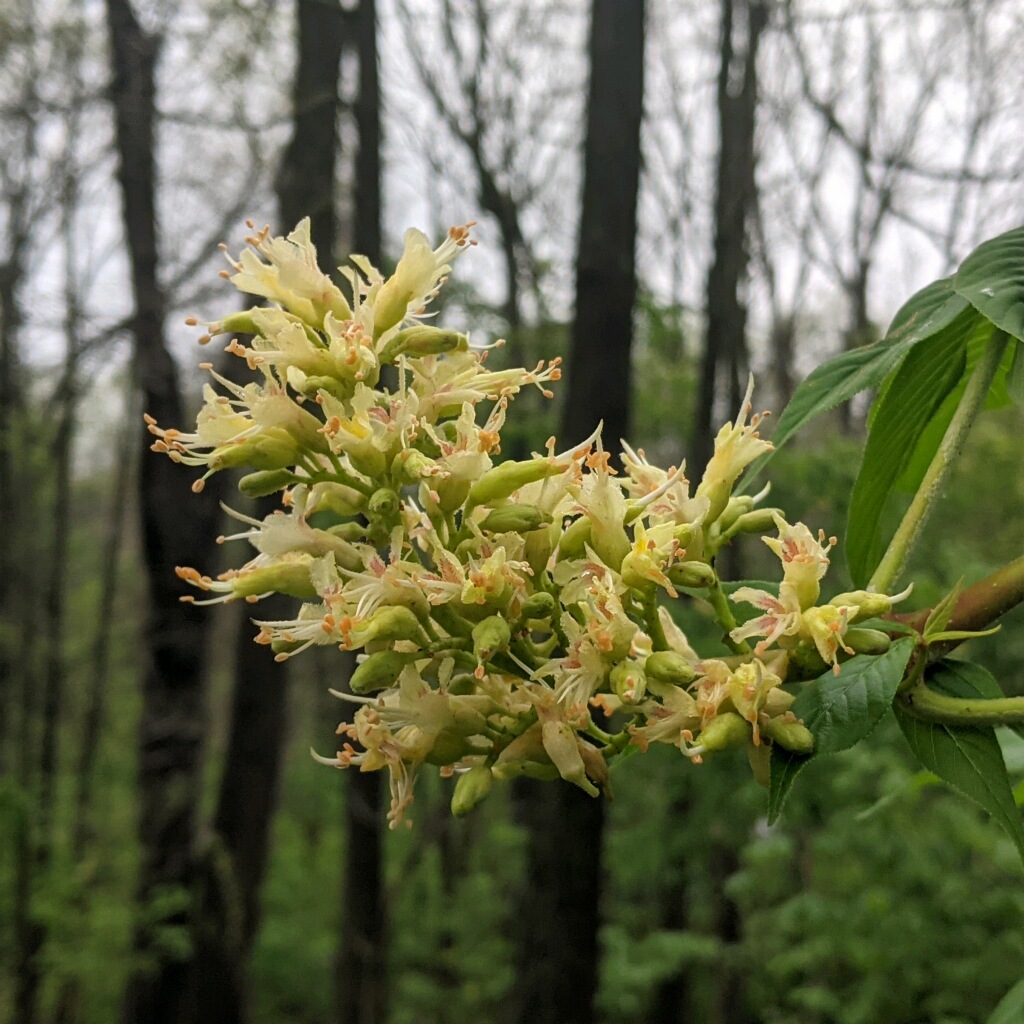
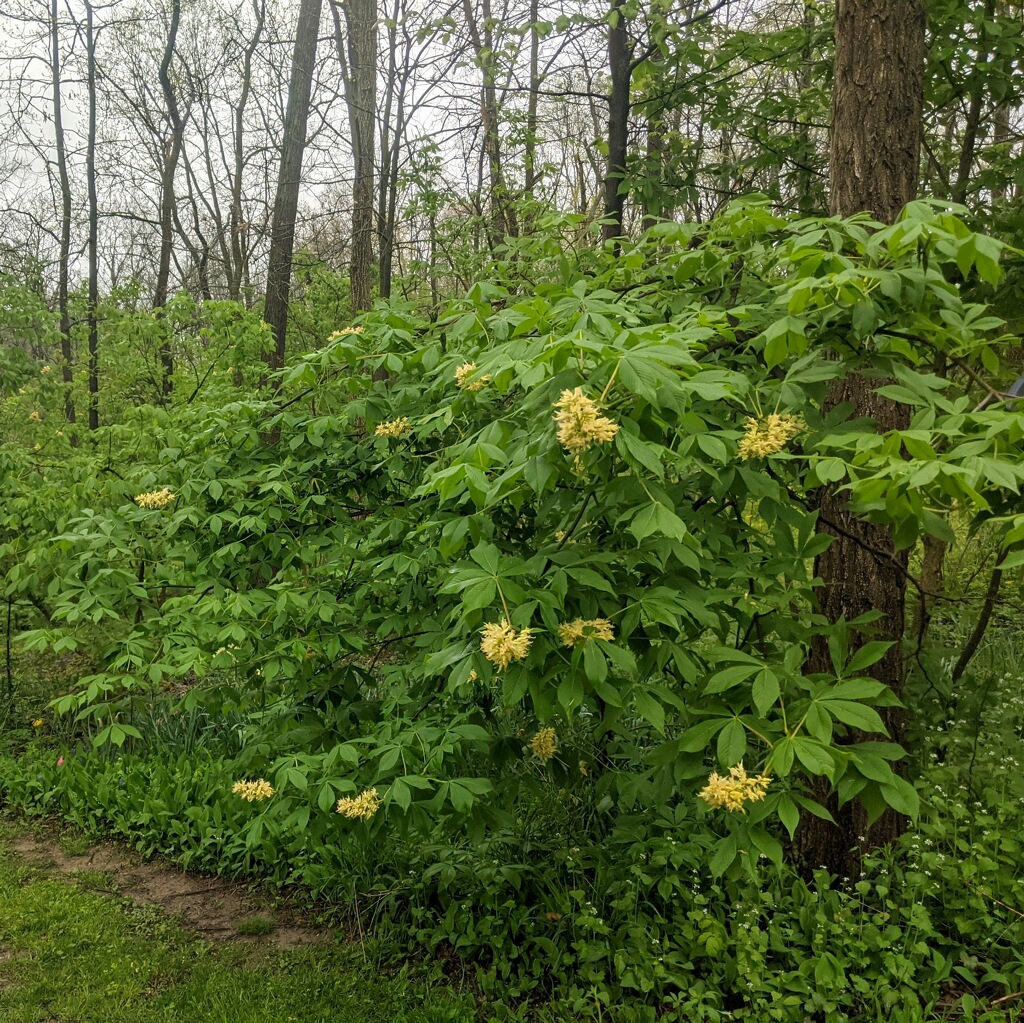
Buckeyes are blooming now, just in time to provide nectar for returning hummingbirds. Their characteristic creamy-yellow panicled flowers are pollinated by hummingbirds, bumblebees, mason bees, and long-horned bees. Usually, only 1-3 flowers in a panicle will develop into seed capsules, which ripen during the fall. The round prickly seed capsules are 1½–2″ across. At maturity, the leathery shell of each seed capsule splits open into three parts to release 1-2 large smooth shiny dark brown seeds with a characteristic “eye.” These seeds are eaten by fox squirrels and grey squirrels, who help distribute the seeds by burying them for later use, then forgetting where they left them.
One knock against them is the likelihood of leaf blotch and premature leaf drop in late summer after hot, dry periods. The problem is seemingly only aesthetic. This is also less likely to happen if they are sited in a location protected from prevailing winds and away from heat reflected off buildings or pavement.
We are seeing groups of Buckeyes quickly coming up in woodland openings left by the dead ash trees. Buckeyes prefer average to moist soil, and part shade. Mature trees are about 40-60 feet tall and wide. For best success, employ root irrigation until they are well established.
May 2021 Newsletter
