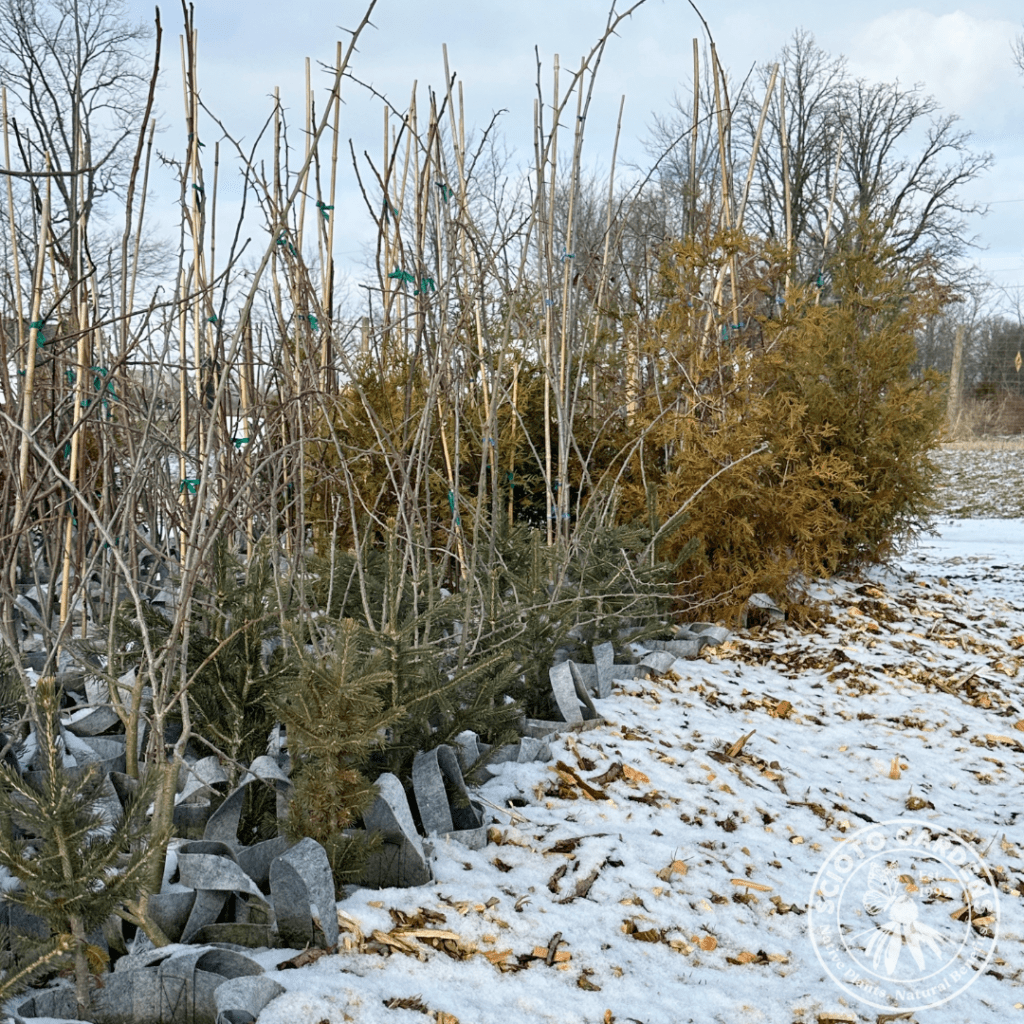
Scioto Gardens looks quite a bit different during the winter, but there’s still activity all season. To begin with, it takes a lot of work getting the plants ready for winter, though they do stay outdoors all winter long. Everything needs to be gathered, counted, and transported to their winter destinations. Pots are stacked neatly with as few/small gaps as possible to simulate being in the ground. Mulch is used to form an insulating barricade around the outside of our pots for insulation. And there are a lot of plants to do this for!

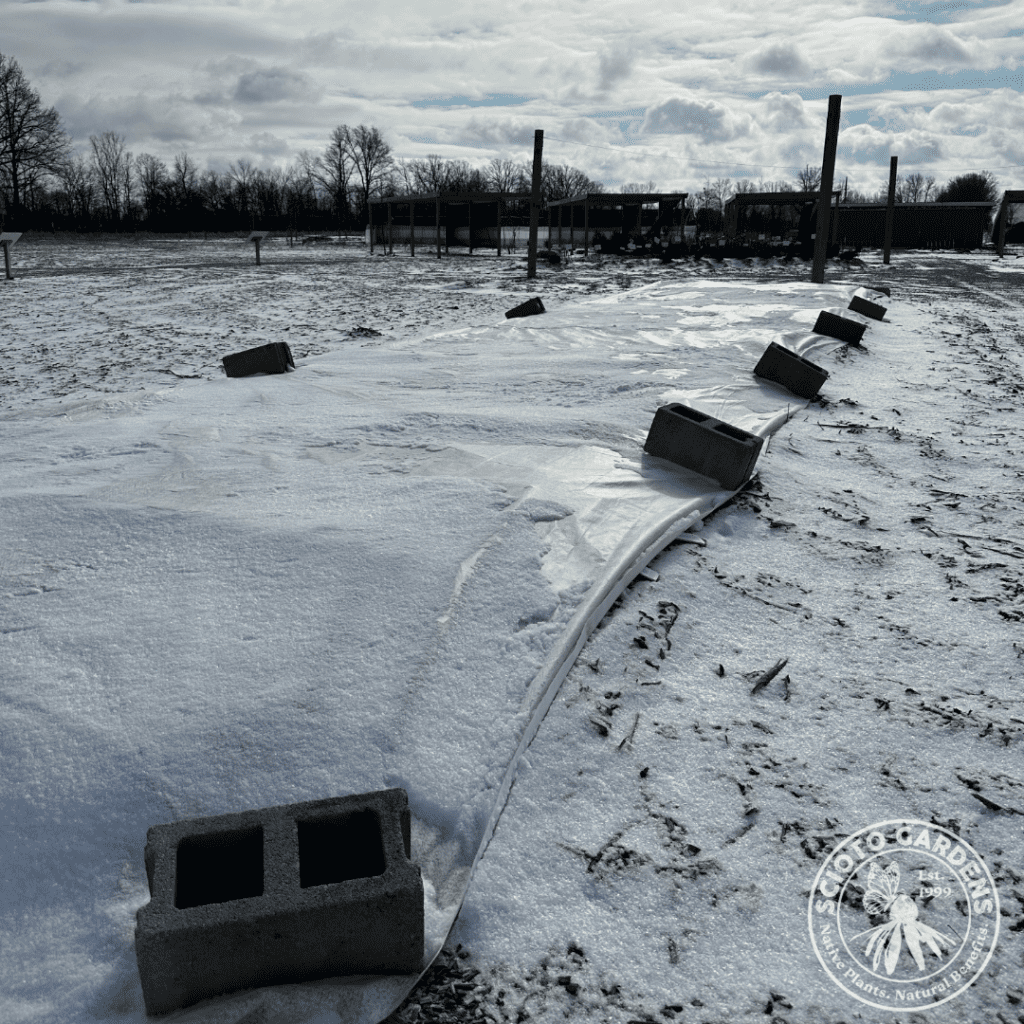
More sensitive plants, like our woodland perennials, sedges, and ferns, also get covered with frost blankets since many normally grow in areas that are somewhat sheltered. Their stems, however, can sometimes be sharp and could potentially damage the blankets, so to protect the frost blankets as they get jostled by wind throughout the season, tall stems get cut back to a reasonable height. Grasses and sedges that are adapted to open spaces also receive a hair cut, so to speak, so that they can capitalize on the sunlight during the beginning of their growing season next spring. They are used to the cold and the wind in prairies and meadows, and don’t need any extra protection. Similarly, most of our shrubs and trees can tolerate the winter uncovered, making use of the extra insulation that comes with their larger pot sizes and natural cover that they provide for themselves and their neighbors. Some evergreen species are strategically used as windbreaks as well, for just a little extra protection. By the time spring planting arrives, the plants that wintered here at Scioto Gardens are hardy and adapted to just about anything our Ohio weather can throw at them.
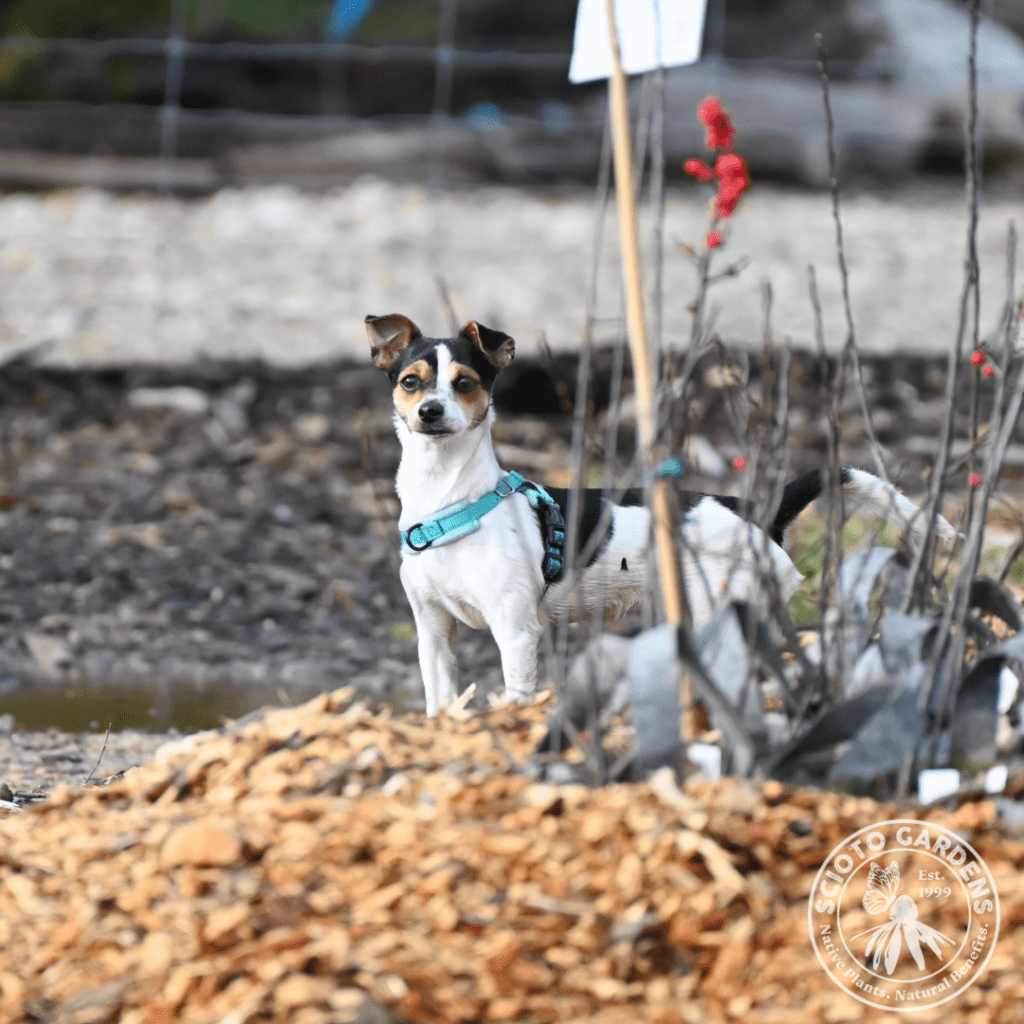
As winter goes on, food becomes more and more scarce for the nursery’s local wildlife. Songbirds have already started feasting on the winterberry, sumac, and other fruit available on our shrubs. Mammalian residents like rabbits, voles, and mice could potentially show interest in our inventory plants as well, and so we periodically apply a natural deterrent (Plantskydd) to keep them at bay. Additionally, we recruit the assistance of our team members’ canine family members, like Chloe, the Jack Russell terrier! As Chloe patrols the nursery, she spreads her scent and reminds the rabbits and other small mammals that “predators” are nearby. Chloe is still learning the ropes, but her first patrol went splendidly! We also use that time to monitor for plant damage; however, between the deterrent, Chloe, and our deer fence, we expect to find very little.
During this time, we’re also preparing inventory for 2027 and beyond by cleaning, processing, stratifying, and planting seeds, when the weather permits. Many seeds can be started during the winter, and they’ll emerge once the growing season and warmer weather return. Some seeds need “cold stratification,” meaning that they require a period of exposure to cold temperatures (usually between 32 and 40 degrees F) and potentially moisture for one or more months before they will germinate. The process softens the seed coat and allows germination to occur later in the spring, and can be done directly in the soil or mimicked in a refrigerator. At home, you can sow seeds directly into the soil (maybe right before a snowfall or lightly pressed to help them settle into the soil and conceal them from birds). Different plants require different durations for stratification, but you can generally direct-sow seeds that need cold stratification from late fall to mid-winter.
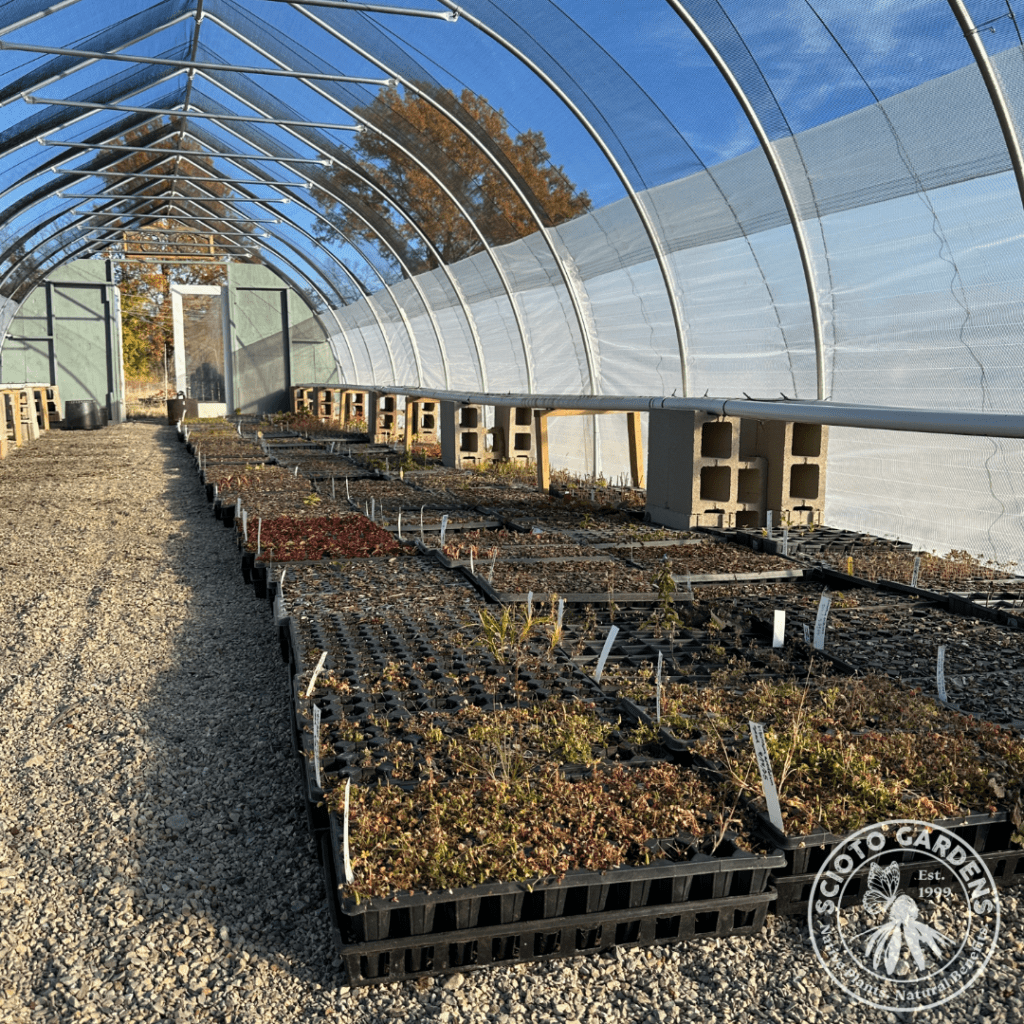
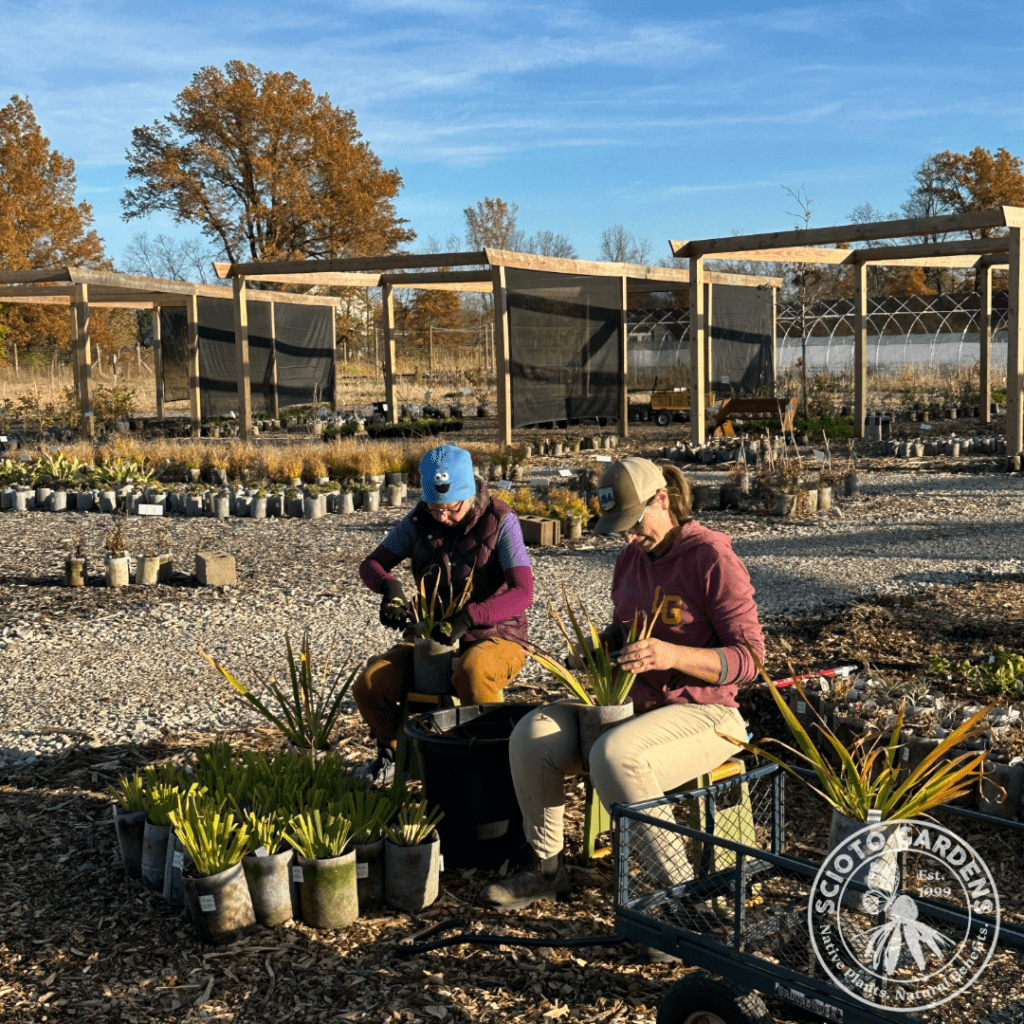
Come March, we’ll start unpacking our hardiest plants and return the nursery to how you remember it, with plants spaced out and organized by their sunlight and moisture preferences. We’ll open for the season on April 1st, and we hope to see you all then!