Buying native plants is the easy part—organizing your yard so it looks and feels cohesive is the challenge. Here are eight ecological landscape design rules to turn those native plants into an intentional wonderland, even a picky HOA will love.
1. Start with a Scaled Base Map
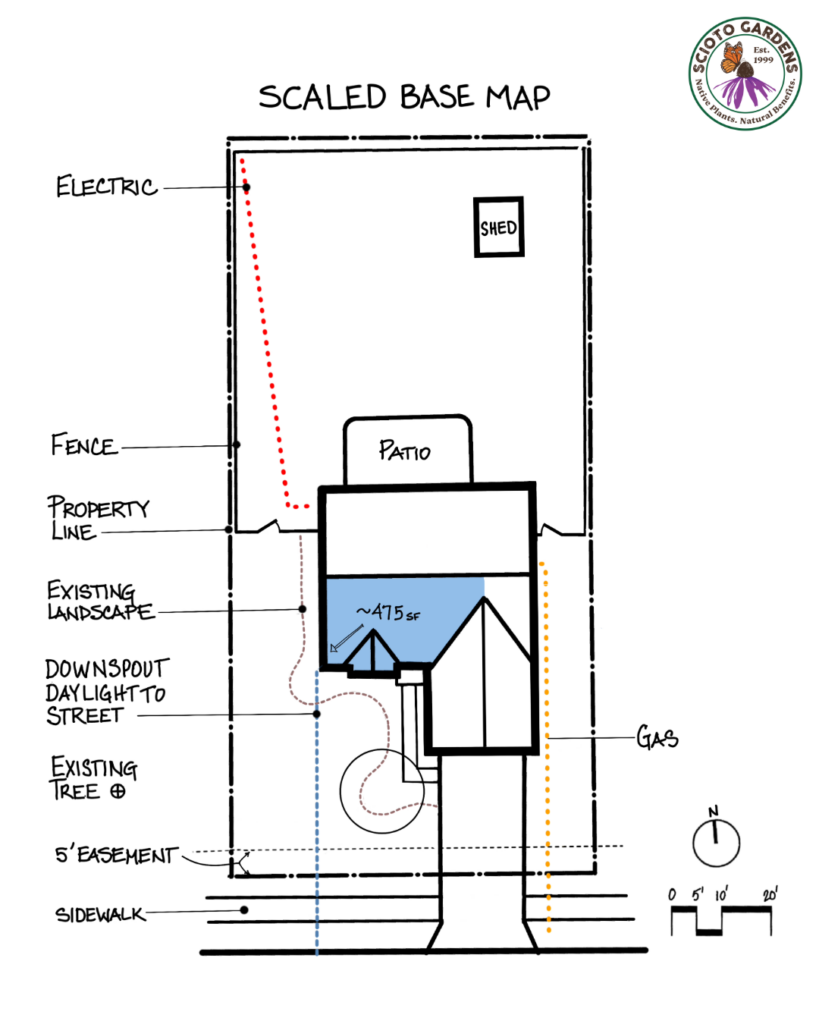
A base map is a scaled drawing that captures your property’s existing conditions from a bird’s-eye view. Use a base map as the starting point for your design to ensure every new feature fits within your space. Tip: start with a copy of your plot map, or an aerial image downloaded from your county Auditor’s website.
2. Pick a shape theme
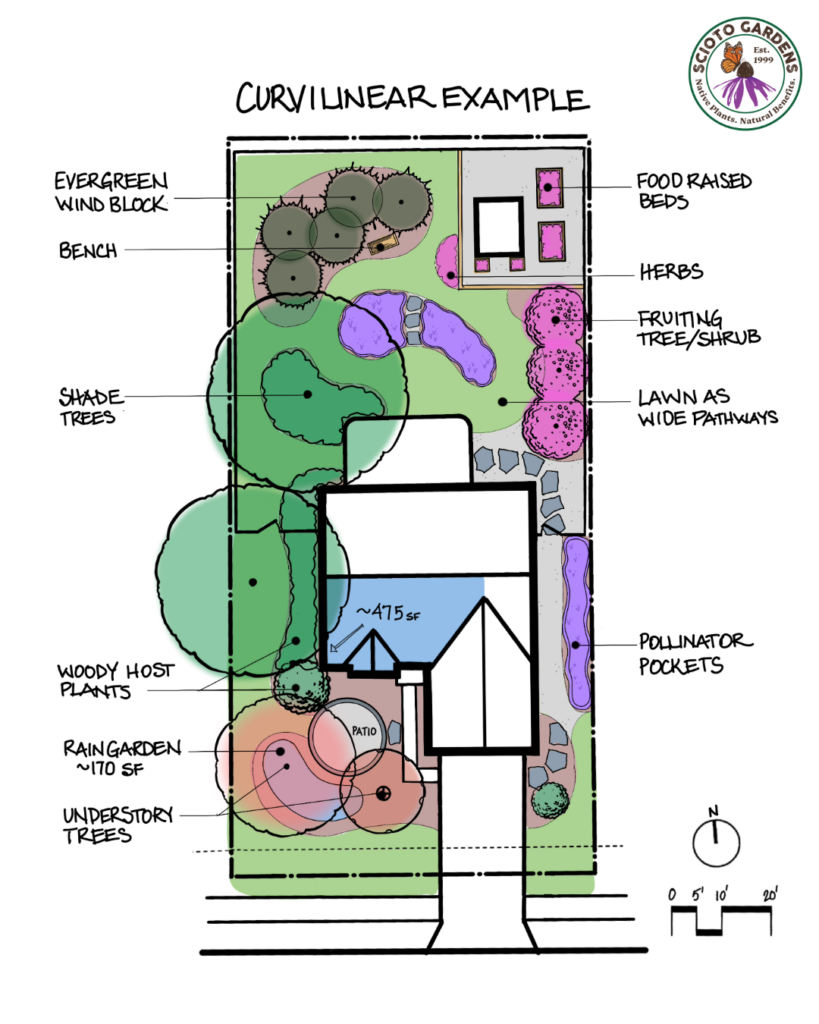
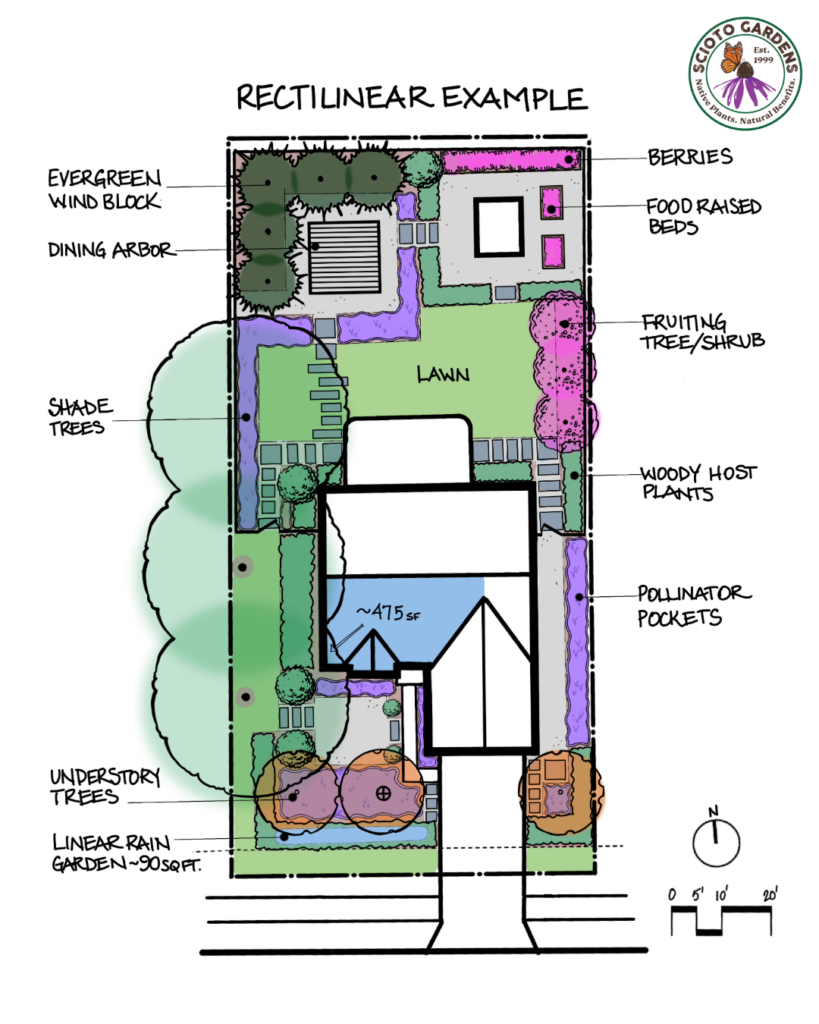
Use a cohesive shape theme. Repetitive shapes unify a design, making it look intentional and harmonious instead of a hodgepodge of disconnected plants. Choose from Rectilinear, curvilinear, circular, arc-tangent, or diagonal themes. Rectilinear shapes feel formal and orderly, while curvilinear, arcing shapes feel relaxed and naturalistic. Note: the front yard and back yard can have separate shape themes.
3. Place groups of evergreen trees to block cold Northwest winds.
If cold winter winds make your yard uncomfortable, add a group of evergreen trees on the northwest portion of your yard. This windbreak will reduce heating bills in the winter and provide protected shelter for overwintering birds. Tip: the ‘sweet spot’ for placement is 2 to 5 times the mature height of the trees from your house (Place a 40 ft tall windbreak 80 to 200 feet from the home).
4. Place shade trees on the West or South side of your home.
Prioritize placing deciduous trees on the west side of your home for shade from the hot afternoon sun. Summer cooling costs can be reduced up to 20% to 50% with strategically placed trees. Plant trees at least half the mature canopy distance from your home (If a tree gets 40 ft wide, plant it at least 20 ft from the house). Note: oak trees host more than 450 different species of butterfly and moth caterpillars (Lepidoptera).
5. Grow food where it receives Southeast sun
Food crops benefit from morning sun (opposed to afternoon sun). Plants wake up and start photosynthesizing, growing early in the day. Dew quickly dries to prevent fungal issues, and the scorching afternoon sun is avoided. Tip: plant shorter crops on the southeast of taller crops, so they don’t get shaded out.
6. Group woody plants to host caterpillars
More than just foundation plants, most native trees and shrubs are ‘host’ plants for Lepidoptera, the caterpillar form of butterflies and moths. Attracting caterpillars to your yard is like installing a living bird feeder, as baby birds eat caterpillars almost exclusively. Improve your garden’s climate and habitat by layering plants: use canopy trees for nesting, understory shrubs for protection, and ground cover for foraging. This mimics a woodland ecosystem that naturally cools the soil.
7. Add pollinator pockets within defined shapes
Design groupings of pollinator plants to provide a “concentrated oasis” of food and habitat for native bees, butterflies, and other beneficial insects. Choose species that bloom in each season for continuous pollen and nectar. Add host plants, like milkweed for monarchs or golden Alexanders for black swallowtail butterflies. Note – smaller native bees travel only 600 to 1,600 feet to forage (about 200-500 human strides), so create a ‘pollinator pathway’ with neighbors down the block.
8. Add a rain garden to manage stormwater runoff
Rain gardens are planted, concave depressions built to capture stormwater running off of hard surfaces like roofs and driveways. They act as sponges, soaking up rainwater that would otherwise rush away to overwhelm, erode, and pollute streamways. Rain gardens are sized to be roughly 20-30% of the size of the surface area they drain, ranging from 4 to 8 inches deep, and should drain within 24 hours. Tip: Plant the bottom of rain garden basins with wetland plants that tolerate periodic flooding and also survive dry summer conditions.
Want help? Scioto Gardens’ ecological designers can create a master design plan for your yard, then our installation crew can bring it to life. Visit our WEBSITE to learn more and get started.