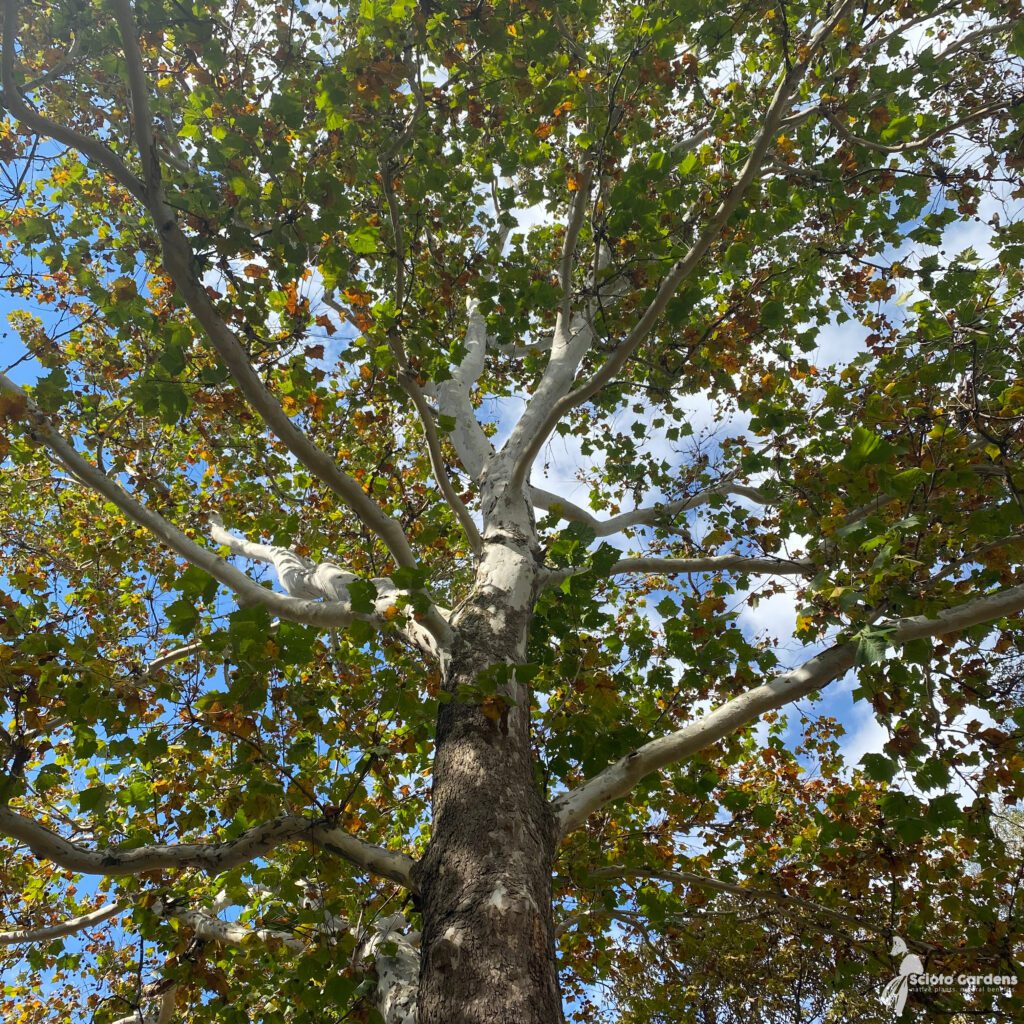
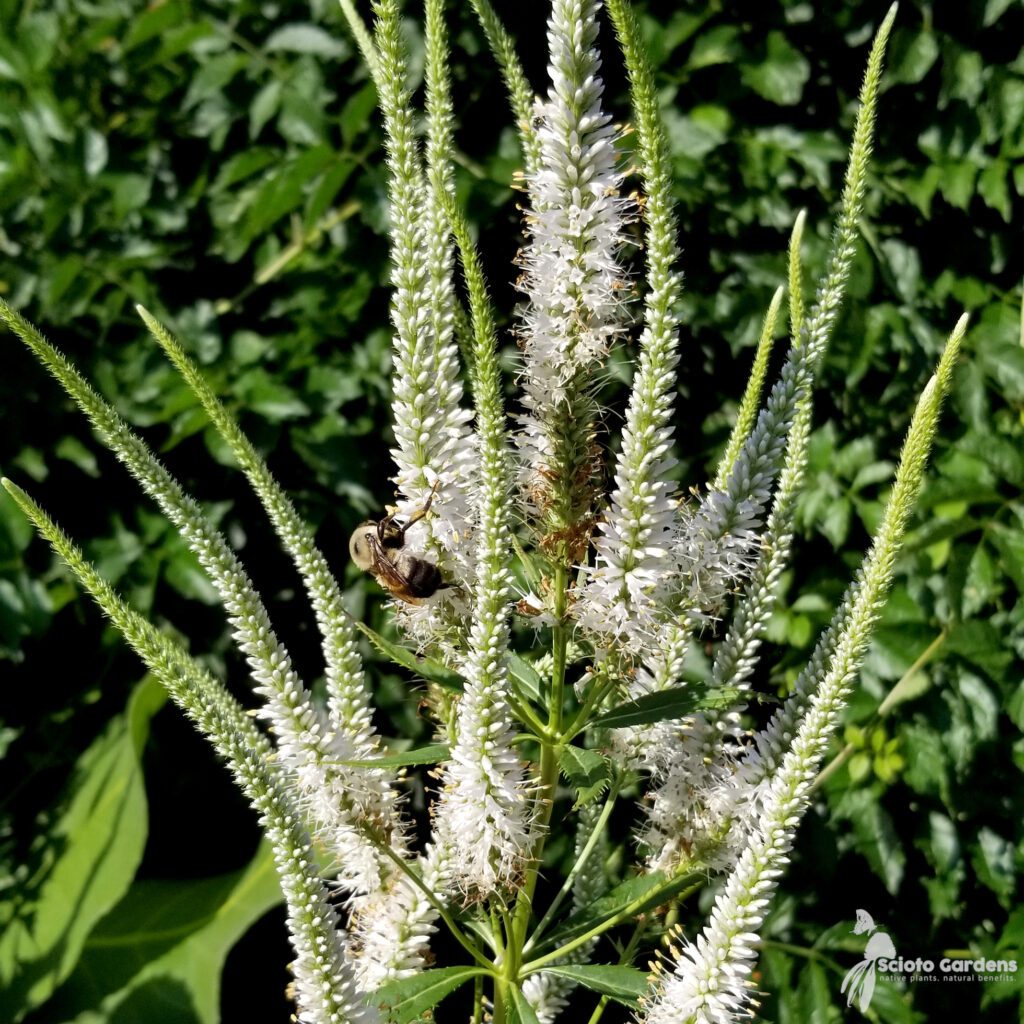
| Sycamore (Platanus occidentalis) Prime bat roost tree that has exfoliating bark and may form large hollows | Culver’s Root (Veronicastrum virginicum) Example of a white bloom for moths |
Bats are an important member of our wildlife community, consuming large numbers of mosquitoes, moths, beetles, and other nocturnal insects including many pest species. In honor of Bat Appreciation Day on April 17, 2024, here are some pointers to help landowners create habitat and resources for bats:
● Provide clean water in the form of a pond or bird bath in an open area. Bats appreciate having a drink when they emerge in the evening.
● Plant native plants with night-blooming and pale or white flowers to attract nocturnal pollinators. Pale and white flowers attract more night-flying insects like moths and beetles than other colors. They also prefer flowers in clusters or that have landing pads, and of course it helps if the flowers open at night!
● Leave leaf litter and brush piles that serve as cover for insects. Just like bats need cover for their daytime roosts, their insect prey need shelter when they aren’t flying.
● Preserve trees with hollows, crevices, or shaggy bark that serve as bat roosts. Dead trees, or snags, and trees larger than 20 DBH (diameter at breast height) are great potential roosting sites as well. They are even better candidates if they are located in a sunny gap in the tree canopy, to allow easy access.
April 2024 Newsletter