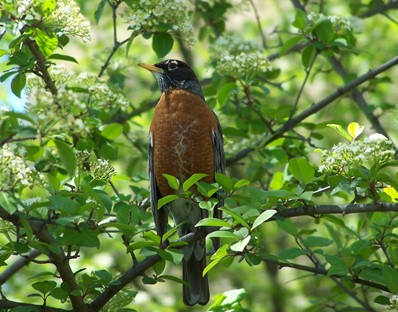
| During brutal cold spells like we’ve experienced this week, do you stop to wonder how the birds in your landscape are faring? As a native plant gardener, it’s likely that you have (but if you haven’t, now is a great time to give it some thought). Birds rely on native food resources for energy to stay warm and make it through the cold and snowy months, and those resources can be relatively scarce in a landscape dominated by turf grass lawns and non-native ornamental plants. Replacing your lawn with native plants is a great way to support birds year-round, but let’s consider the specific plants that provide food for birds when insects are scarce in the winter. First, let’s talk about plants that provide fruit in the winter. These plants are often conspicuous and decorative, and especially noticeable when covered by a roving flock of cedar waxwings or American robins that are constantly searching for the next meal. These plants can be split into two groups, those that produce high-quality fruit that is rich with lipids, and low-quality fruit that is less energy-dense. Both are equally important, despite the implications of their names! |
  |
| Winterberry Nature Bird Feeders High and Low-Quality Fruit |
| High-quality fruits come from plants like northern bayberry, dogwoods, arrowwood viburnum, and spicebush. Their fruits are lipid-rich, are prone to spoiling relatively quickly, and are some of the first fruits eaten in the fall and early winter as migrating and resident birds look for the most efficient meals to fuel their flights or keep them warm. Low-quality fruits, or those with around 10% lipid content or less, include staghorn sumac, winterberry, chokeberries, snowberry, and American cranberry bush viburnum. These plants often retain their fruits long into the season without spoiling, which is important because they are available when birds often have few other options, and provide energy to get them into the spring when insects start to emerge. Even withered and shriveled fruit can provide an important meal. They also often have high decorative value since their fruit will provide interest much longer in the winter. Ideally, a landscape should have both options available so that birds are fed from fall to spring. Your northern cardinals, waxwings, robins, eastern bluebirds, and more will thank you for it! The other group of plants to consider are those whose seeds last long into the season. These provide meals for seed-eating birds like many sparrows, American goldfinches, chickadees, and downy woodpeckers, just to name a few. Perennials and grasses that you can add to your gardens that provide winter seeds include purple coneflower, black-eyed Susan, prairie dock, goldenrods, sunflowers, asters, ironweeds, big bluestem, little bluestem, switchgrass, northern sea oats, and oak sedge. There are so many more options as well, it’s hard to list them all! It doesn’t stop there though. For gardeners thinking long-term, there are also nut-producing plants (often large trees) that birds like blue jays, woodpeckers, and wild turkeys also rely on. Consider adding oaks, hazelnuts, butternuts, black walnuts, or beeches to provide winter resources for larger birds. We hope you all are staying warm during this arctic vortex, and that your birds are well fed and energized. If you need to add more winter food options for your local birds, there’s no better time to start planning your additions! |
January 2025 Newsletter