
Spring is really here, and more and more spring ephemerals are available now on our website. This week we have two new species ready: Blue Cohosh and Grand Merrybells. Take a look at their bios below to see if they’re right for your landscape!

Blue Cohosh (Caulophyllum thalictroides)
This woodland wildflower is named for the blue-green, rue-like foliage and bright blue, berry-like seeds. The loose panicle of starry yellow flowers isn’t particularly showy, but the blue fruits are a welcome sight. While the fruits are poisonous to humans and dogs, they are eaten by birds who distribute the seeds. Blue Cohosh reaches 1-3 feet and requires part to full shade in moist soil, and is also deer and rabbit resistant.
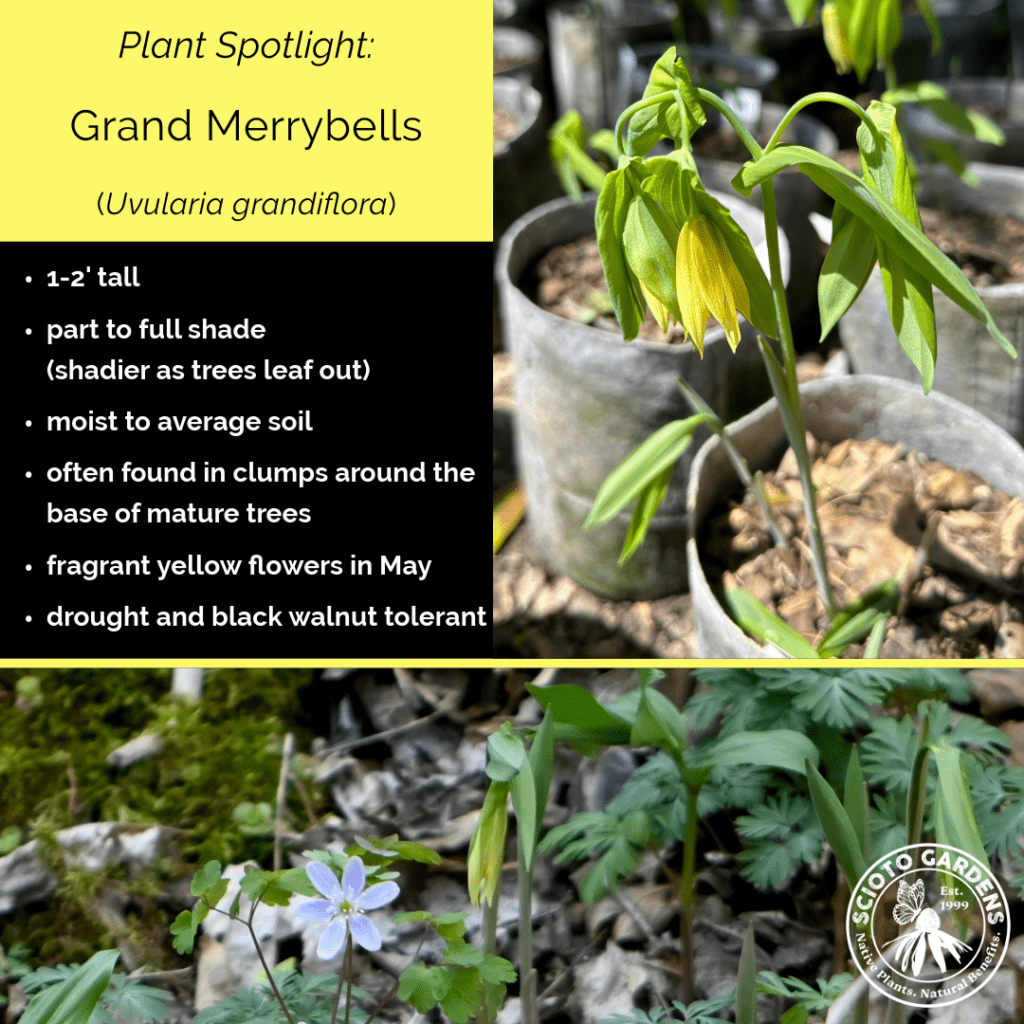
Grand Merrybells (Uvularia grandiflora)
Also called Large-flowered Bellwort, these understated wildflowers make a graceful addition to a shade or part-shade garden. Growing 1-2 feet tall, they spread by rhizome and may form colonies given time. The drooping yellow flowers have a sweet fragrance and provide nectar and pollen for insect visitors. Deer do love the foliage of Merrybells, which has led to this plant’s decline in the wild, so extra protection may be necessary. They require moist to average soil in part to full shade, and become drought tolerant as they mature.
