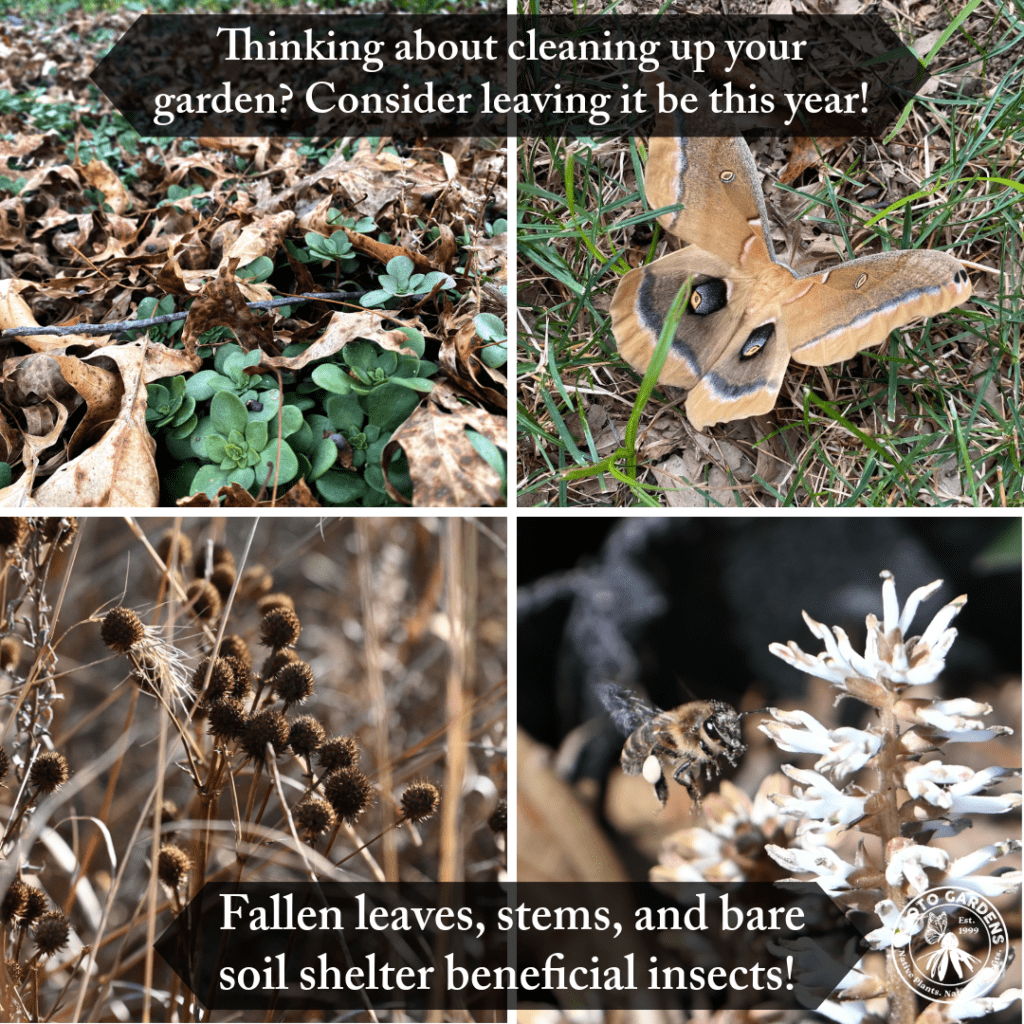
| With the days growing warmer, it can be very tempting to go out into our gardens and “tidy up” for spring. Removing old stems, clearing leaves, and putting down new mulch might sound like a great idea, but if you value the wildlife that depend on the habitat you create in your gardens, it’s worth holding off. In fact, it may be best not to clean up much at all! Wildlife like bees, butterflies, and fireflies don’t just leave our gardens when the flowers stop blooming in the fall. Many of them are still around, sheltering in the leaves and other debris that accumulates throughout the year. Fallen leaves become the home of firefly larvae, who help control pest species like slugs. Queen bumble bees hibernate in the leaves during the winter, and only emerge in spring when flowers are starting to bloom again. Butterflies and moths shelter in the leaves as well, waiting inside of their chrysalises until the conditions are just right. By removing the leaves, you remove all of the organisms sheltering within. Stems are also important for our beneficial insects. Last year’s stems may be used this spring and summer as nests for small, native bees. They lay their eggs in the hollow stems along with balls of pollen that will feed the larvae until they emerge the following year. It can take two full years for these stems to play their part. Even patches of bare soil are important, and covering or tilling them may be as disruptive as raking leaves. Many native bee species only nest in bare soil, so just like their counterparts that use hollow stems, these bees are vulnerable to early gardening. |
So, when is it safe to manicure your garden, and what can you do that is less disruptive? Thanks to studies by the Xerces Society and others, we know that insects have a better chance at survival if you wait to do anything until after nightly temperatures are consistently above 50 degrees F. That way, the insects have time to emerge from their winter shelter and are less susceptible to intolerably cold nights. If you must remove leaves from one place or another, try your best to relocate them into another area in your landscape. Throwing the leaves out or mulching them is a death sentence for the wildlife inside. Stems should be left standing, but may be pruned down to various heights between 8 and 24 inches tall. Doing this may actually encourage bees to nest in them, since access will be easier and there will be height options that appeal to different species. If you must remove stems, do your best to relocate these as well to a quiet corner of your garden to preserve any insects already inside.
What about gardening with plants that appreciate clear roots, like many wetland and prairie plants? It’s all about striking a balance. Many plants that are used to wind, fire, or even water clearing away debris from their root crowns may not perform well if they are covered in leaves. In those instances, if possible, simply relocate the leaves and other plant matter so that you can find a balance, and the best solution for both your plants and wildlife.
Hopefully, by following these suggestions, you see your gardens’ pollinators and other beneficial wildlife thrive this year!