
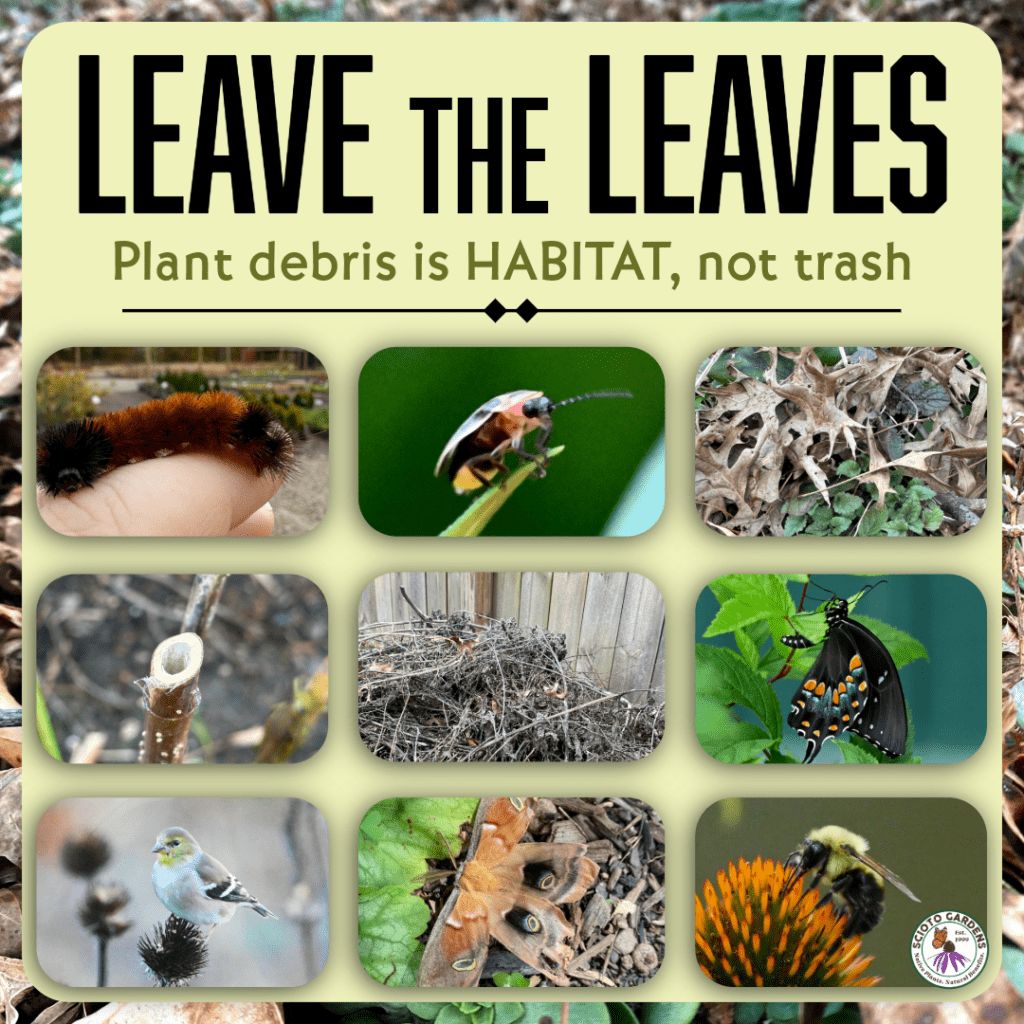
While it is tempting to rake the leaves and remove the dead stems from your dormant gardens, we urge you to take a more relaxed approach to fall cleanup. Why? The leaves, stems, and other plant debris that seem unsightly at first are providing essential habitat for the same wildlife that we garden for during the spring, summer, and fall. By bagging up and trashing the leaves, we’re also bagging up thousands of beneficial insects and sending them to the landfill.
So take it easy this fall, and learn to love your landscape even when it sleeps.
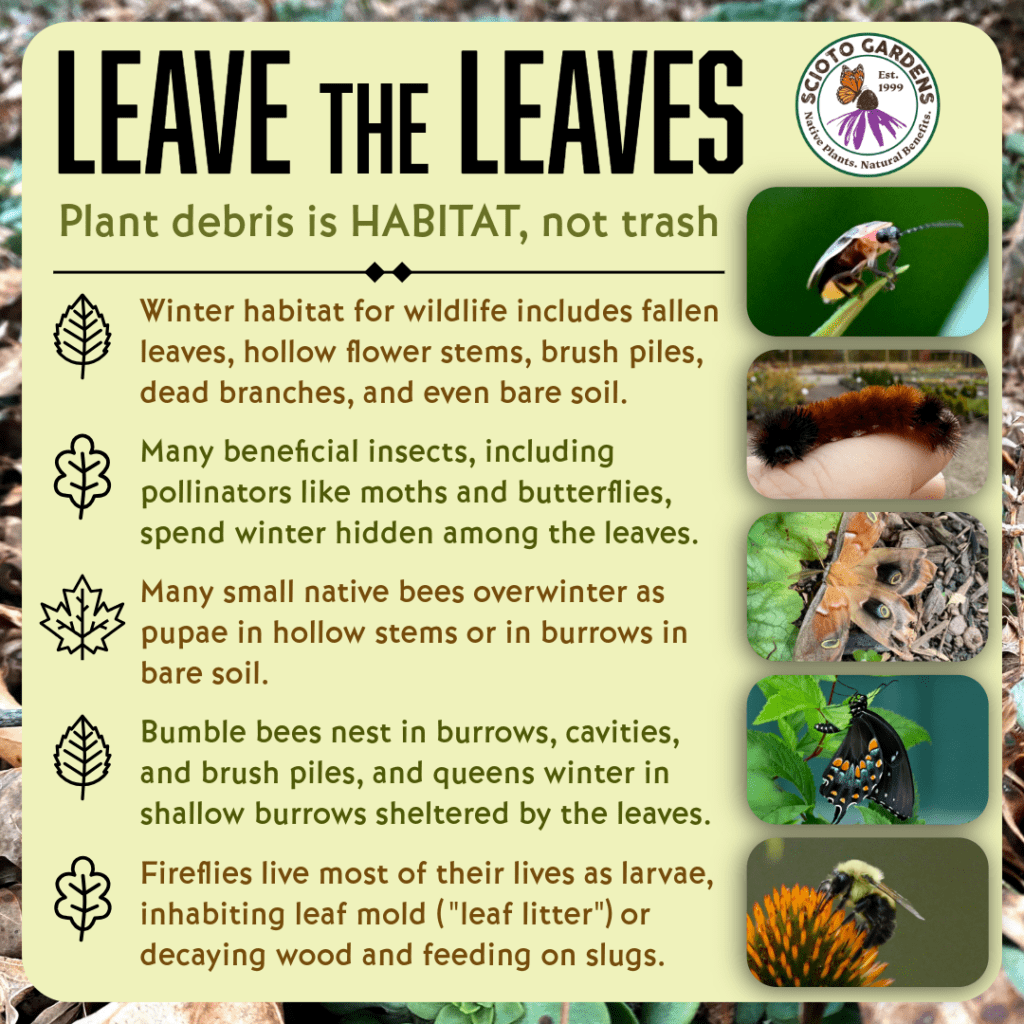
The fallen leaves strewn across your garden beds or lawn? They contain next year’s butterflies and moths in disguise. In the soil below are the firefly larvae and queen bumble bees, waiting patiently for next spring and summer. The stems of your purple coneflowers? The seedheads will feed hungry American goldfinches in the coming weeks, and the stems will be discovered by stem-nesting bees next summer. Said bees are currently sleeping as pupae in the previous year’s stems, which you thankfully left standing last winter, too, or in the pithy canes from last year’s raspberries. That patch of bare soil that you’re tempted to cover with mulch? That might be where the miner bees have their burrows. And a fallen tree branch might be hiding even more chrysalises stuck firmly to its side.
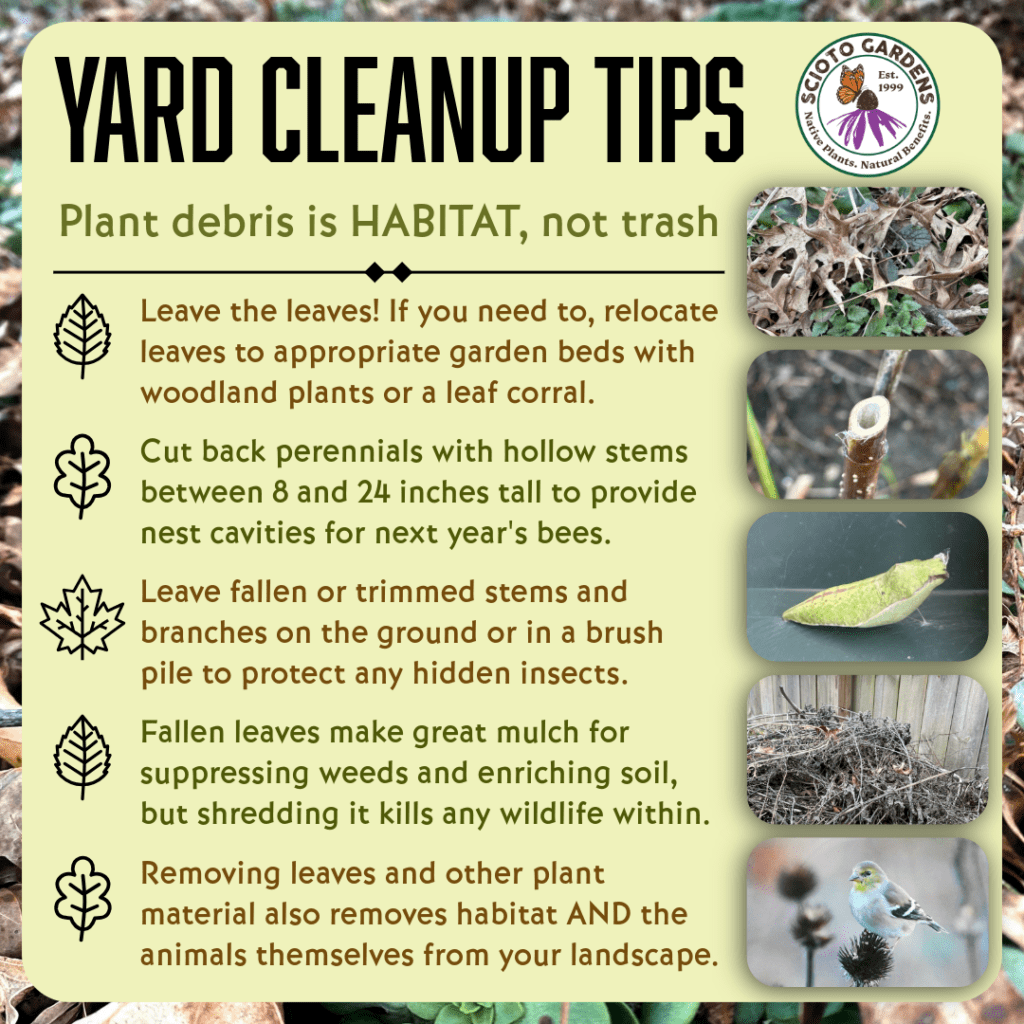
So, what cleanup can you do? Leaves can be relocated from your lawn or from prairie garden beds (where plants can’t tolerate much cover) to your shadier gardens, or even into a plant corral. Just make sure to use a rake or electric leaf blower to preserve the wildlife inside (the fumes from gas leaf blowers can be detrimental). Also, avoid shredding the leaves if supporting insects is your goal. Fallen branches and broken or trimmed stems can be moved to a brush pile in a quiet corner of your property, or stacked in a tower of branches, leaves, and other material to make a bug snug. Perennials that need to be cut back can be left with stems standing between 8 and 24 inches tall to encourage stem-nesting bees next year (and make sure you keep the older stem stubble too, since that’s where the bees are now; it will decompose over time). Selectively pruning shrubs with pithy stems like raspberries or elderberries will also expose nesting opportunities for next year’s bees and give the shrubs a fresh start to encourage new growth.
The next time that you go out into your sleeping garden and feel the itch to tidy up a bit, take a moment to reflect on all of the wildlife that you’re helping by taking it easy. Come springtime, you will start to see more of the beneficial insects you’ve come to love across your landscape!
