  |
| This week marks the beginning of the Chelsea Flower Show in London, and it also marks the time of year when we can cut back many of our summer and fall blooming perennials to reduce height, prevent flopping, encourage bushier growth, and extend bloom times! Candidate plants should be ones that bloom in the summer or later and have branching structures, like Asters or Bee Balm. Blazing Stars, for example, would not be a good choice and may not flower at all after being chopped. You might choose to do this on plants that grow taller than you’d prefer for a space or flop over due to lack of support or that start leaning to find more light. As mentioned, you can also do this to extend the bloom time of a species by selectively chopping some of a given species (the chopped plants will bloom a little later than the others). You can even create tiers of heights and bloom times by chopping front-row plants shorter than back-row plants, or in whatever pattern you prefer. |
  |
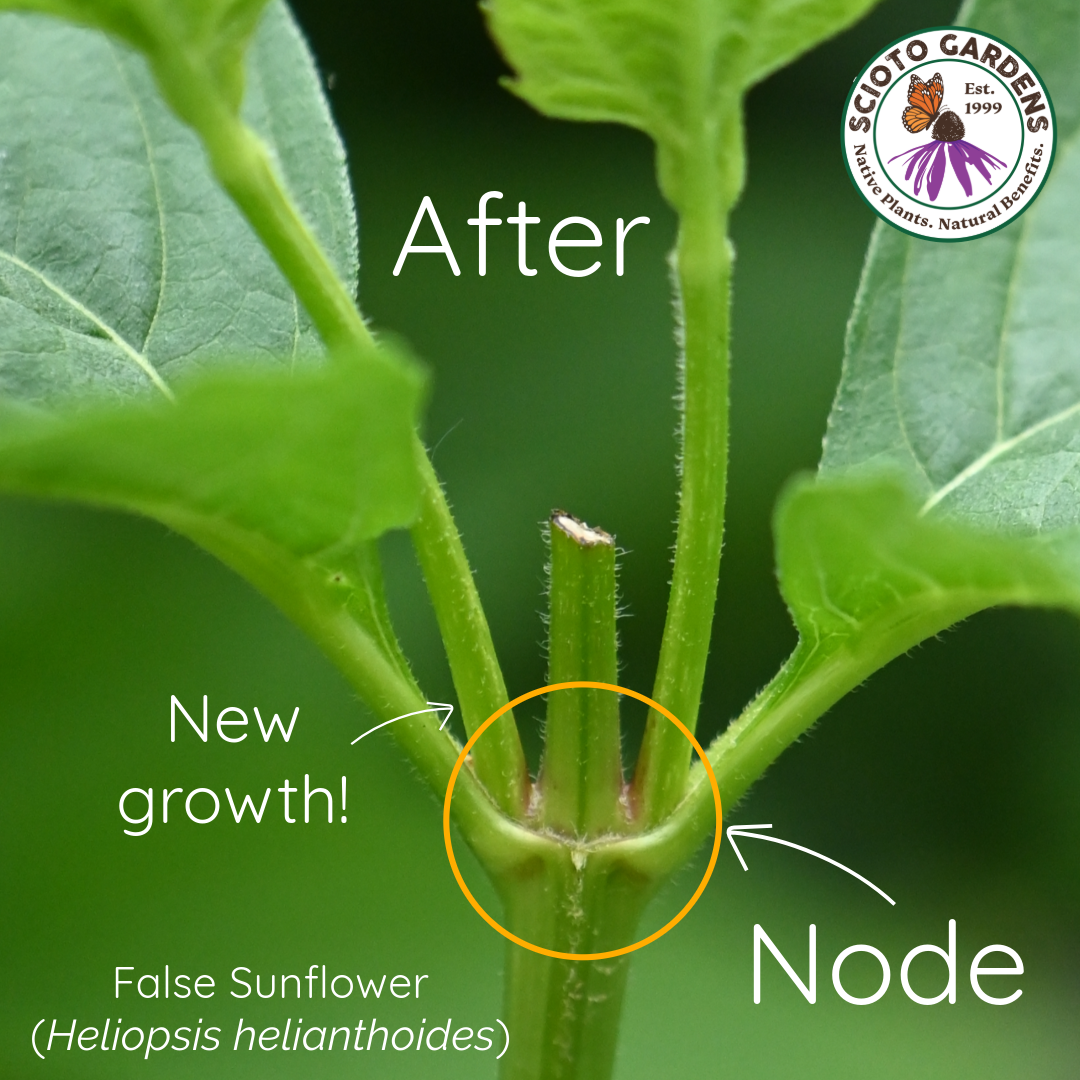
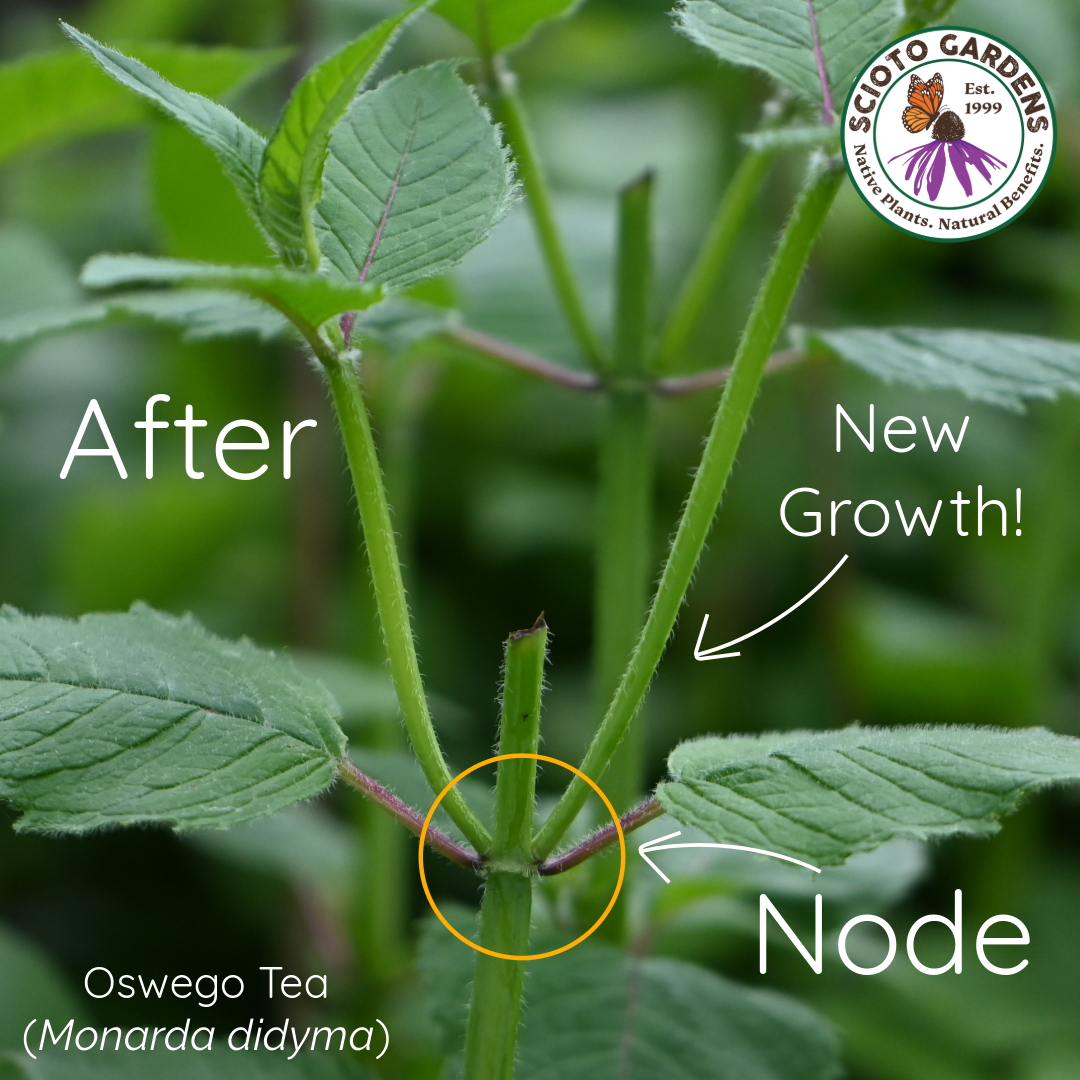
| To give your plants this treatment, cut above a node (where the leaf grows off of the stem). New growth will emerge from the axillary bud above the leaf itself. If possible, cut at a 45-degree angle to help prevent water from collecting on or in the open stem. You can take a plant down by 1/3 to 1/2 of its total height this way. For large groups, you can use shears to cut large clumps at once, but be sure to check for any low stragglers that might shoot above the cut stems during their recovery time. We thought it might be helpful to show how some of these plants recovered just 10 days after being cut back. Two species were cut back on May 20, 2024 – False Sunflower (𝘏𝘦𝘭𝘪𝘰𝘱𝘴𝘪𝘴𝘩𝘦𝘭𝘪𝘢𝘯𝘵𝘩𝘰𝘪𝘥𝘦𝘴) and Oswego Tea (𝘔𝘰𝘯𝘢𝘳𝘥𝘢𝘥𝘪𝘥𝘺𝘮𝘢). As you can see, the False Sunflower and Oswego Tea moved on with new stems quite quickly! |
  |
| Many people might wonder… why cut back our plants at all? In their native habitats, plants are often damaged by browsing, wind, and other conditions that aren’t always replicated in our gardens. Cutting plants back can mimic natural damage and give gardeners a way to manage their plants as they’d like to. For plants like Milkweeds (𝘈𝘴𝘤𝘭𝘦𝘱𝘪𝘢𝘴), the fresh foliage that grows after a cut-back is actually preferred by Monarch caterpillars over older, tougher leaves. That said, there is no compulsion to cut any of our plants back at all, especially if you prefer a wilder garden. |
 |
| We hope this information is helpful and gives you some ideas on how to manage some of your taller summer flowers! |


Shopping Cart