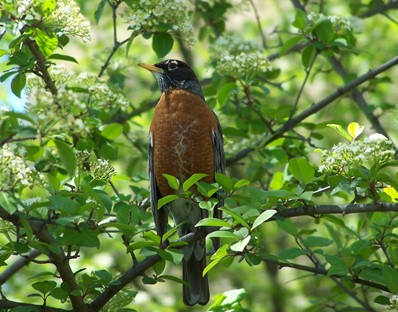
| Among the birds nesting here at Scioto Gardens, none are more beloved than eastern bluebirds. Their stunning colors and soft, whistled songs are easy to adore. So how does one go about attracting them to your landscape? Here are some tips for your gardens that will hopefully bring in the bluebirds! Bluebirds appreciate both leafy cover and open spaces. They need shelter to hide from predators and inclement weather and do much of their foraging out in the open in low grasslands and meadows. Open perches such as fence posts, the tops of small-to-medium trees, and dead branches (aka snags) are especially appreciated because they allow birds to survey the ground, looking for insects to eat or bring back to their young. Nests are made in the hollows of tree trunks or branches, but also in the boxes that humans provide that mimic natural cavities. Providing cavities of some sort is essential to attracting bluebirds during their breeding season. |
  |
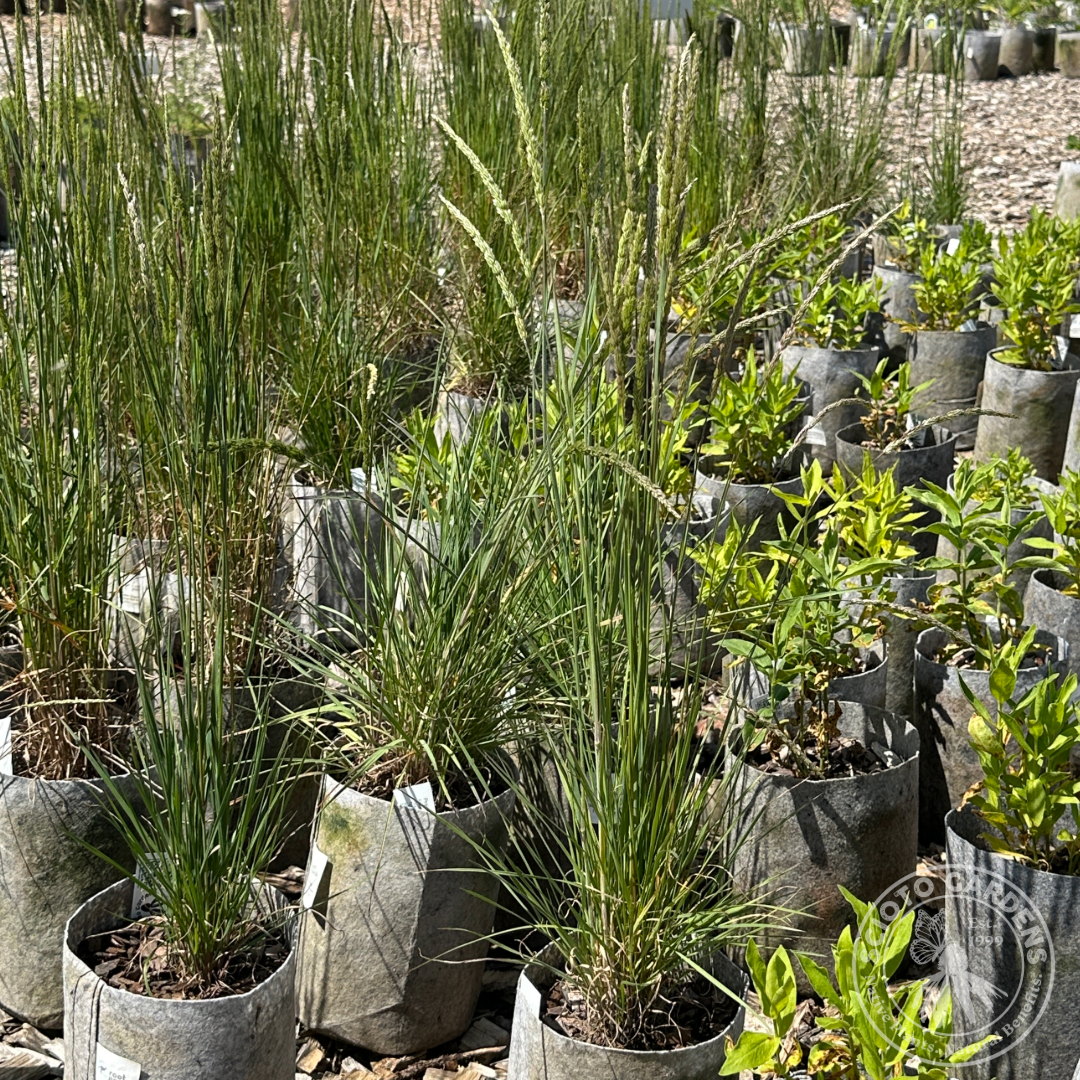
| During the nesting season, bluebirds eat primarily insects, feeding their young a combination of Lepidoptera larvae (caterpillars of moths and butterflies, which is the largest percentage of their insect diet), Orthopterans (grasshoppers and crickets, the next largest group), and other insects. Planting keystone host plants like goldenrods, asters, and even oaks or cherry trees will help provide caterpillars, which is the largest portion of their insect diet. Grasshoppers and their relatives can be attracted with our shorter native grasses (like Prairie June Grass, Sideoats Grama, or Purple Love Grass) and low-growing companion perennials. Bluebirds like to forage for food close to the ground whenever possible, and they have more success when grasses and forbs are shorter. Berries and other fruits are the other large component of their diet, and these foods are especially important during the fall and winter. Many bluebirds stay near their breeding grounds all year, staying in family groups that roost together at night in the same cavities they may have nested in. Planting shrubs and trees that produce berries can reward you with entire families of bluebirds feasting at once and returning for days or weeks until the supply runs out. Plants like spicebush, sumac, winterberry, and dogwoods all provide berries that bluebirds will enjoy. Hopefully, this gives you a few ideas for how you can improve your yard to attract some bluebirds of your own! |
  |


Shopping Cart