
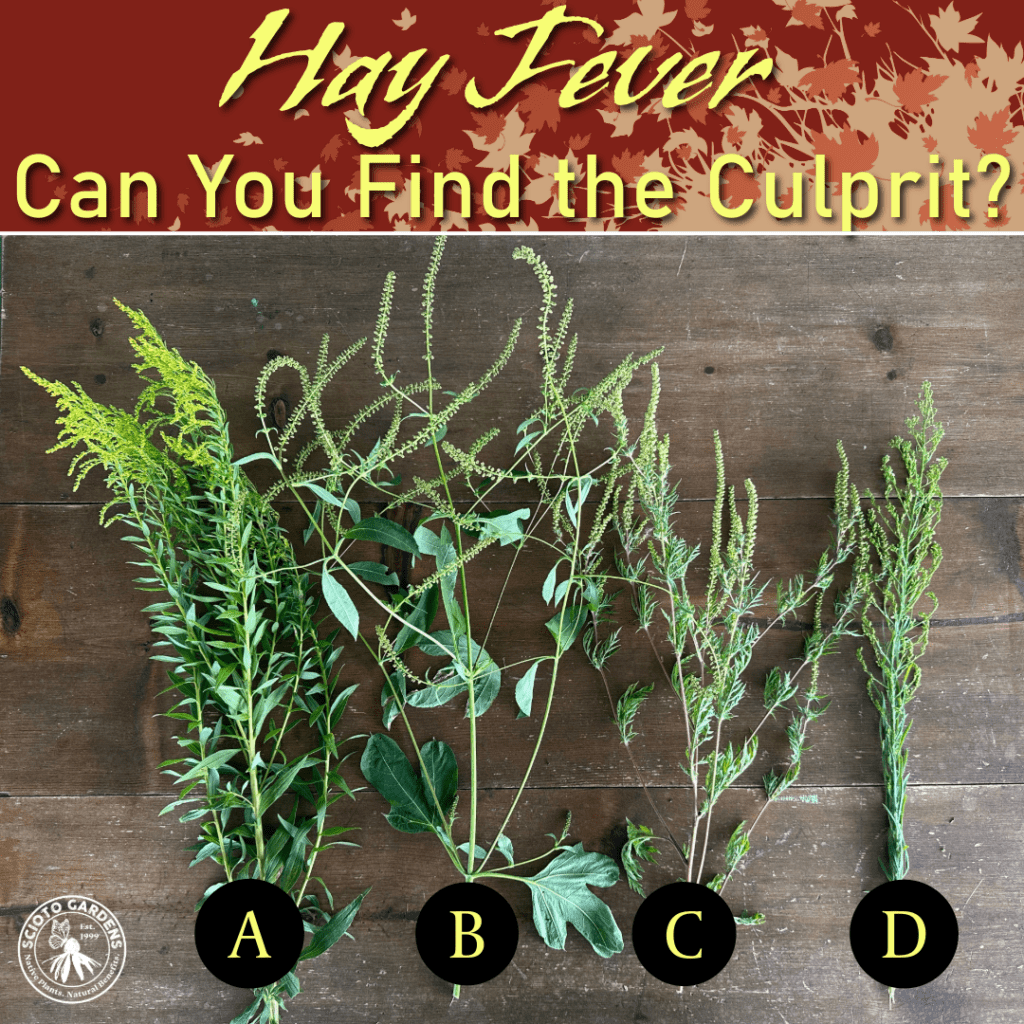
Hay fever, or seasonal allergy rhinitis (usually in the late summer or fall), can afflict 1 in 5 people. It causes itchy eyes, sneezing, and congestion. But do you know the source for “hay fever?” We’ll give you a hint – many people have been blaming the wrong plants for years.
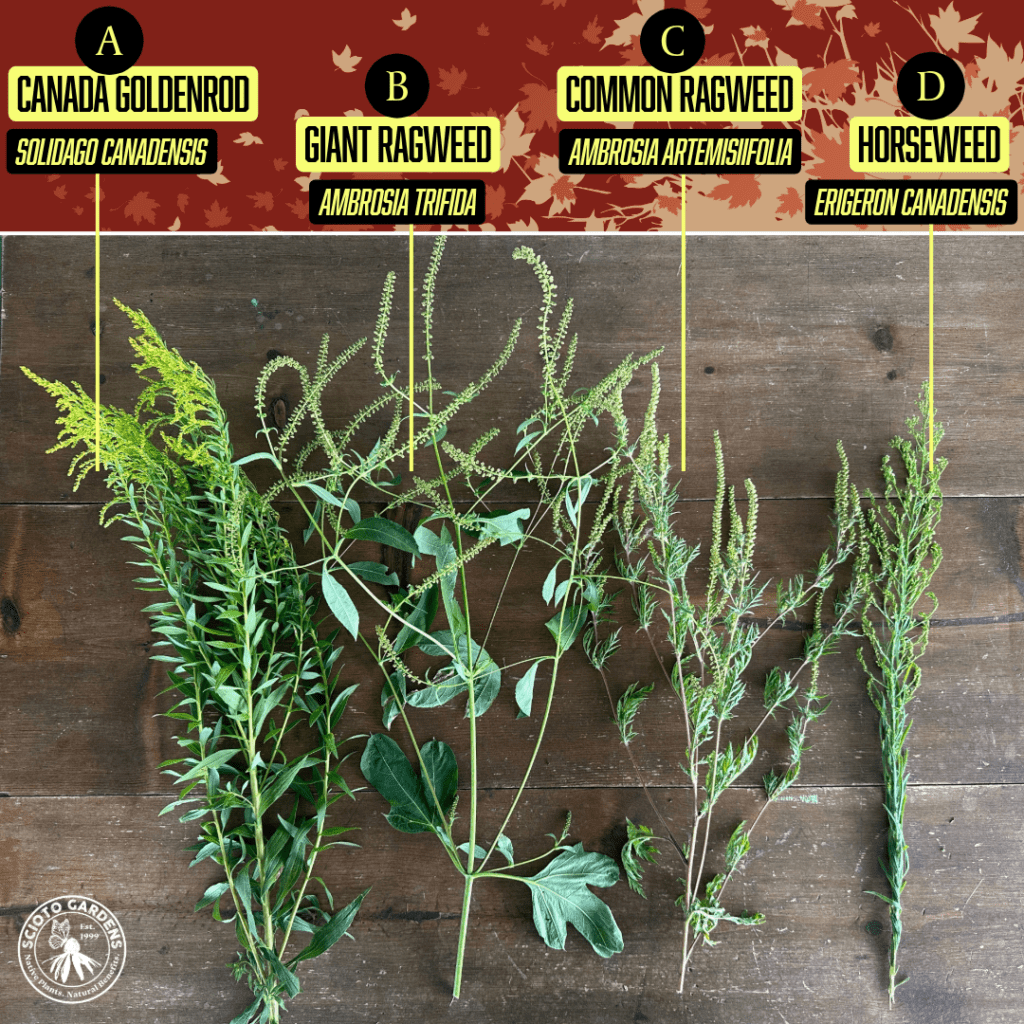
If you guessed either B or C… you’re right!
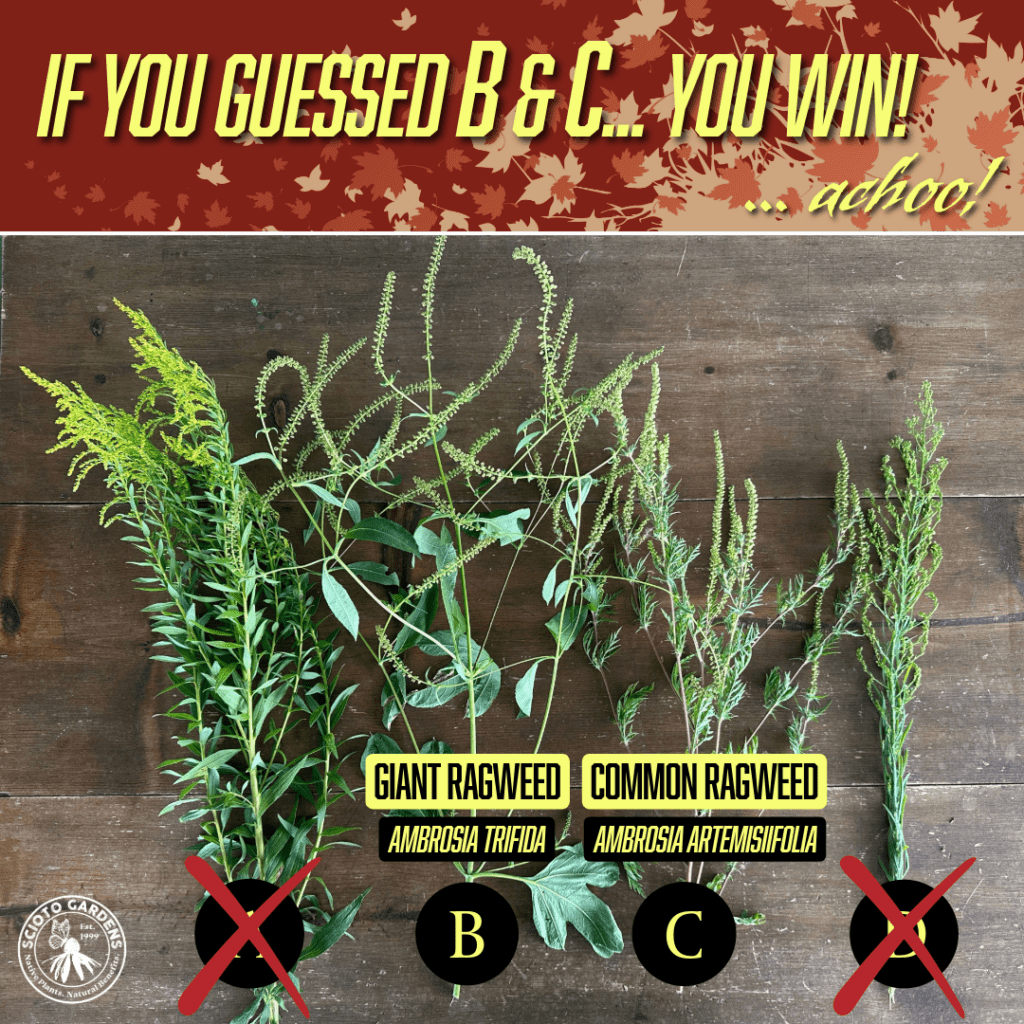
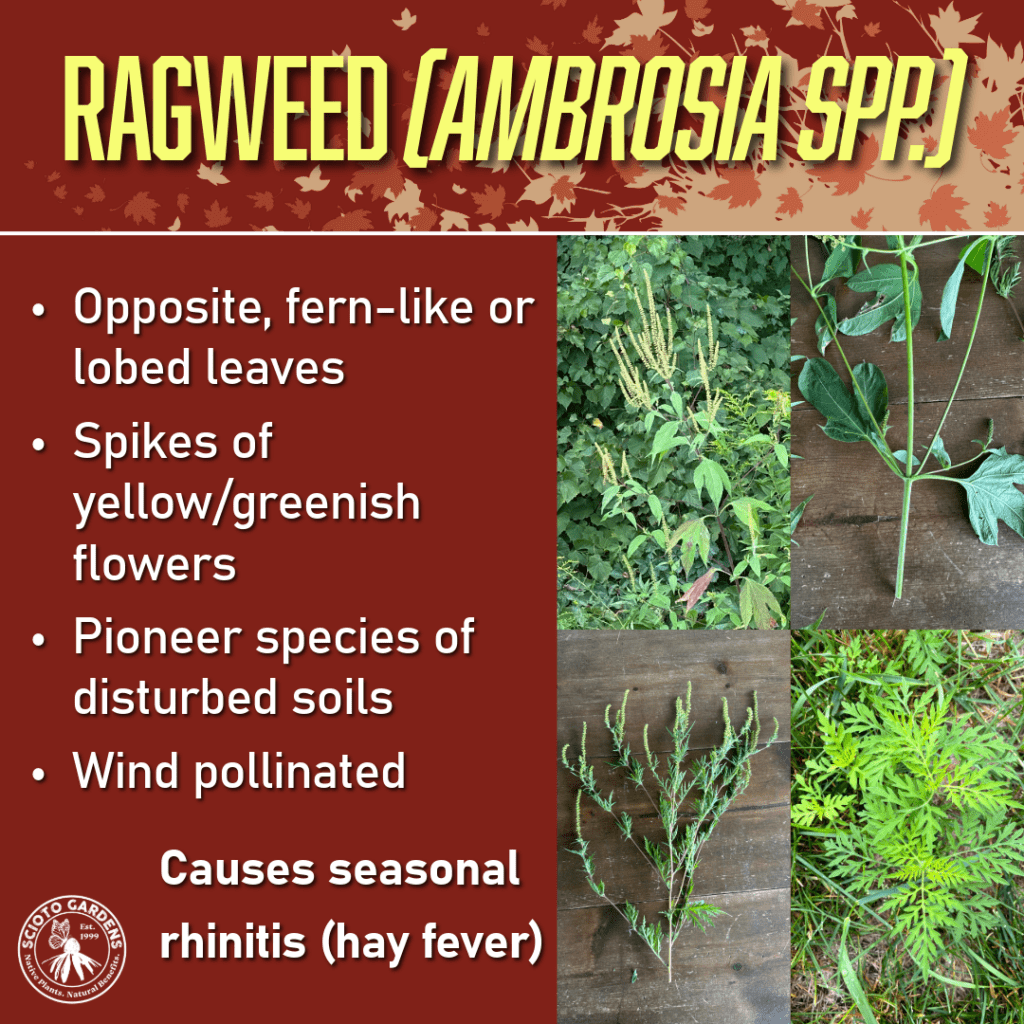
Ragweed is wind-pollinated, and each plant can produce up to 1 billion grains of pollen. Those pollen particles are carried by the wind straight into our nasal passages, and 1 in 5 people are allergic to them. It gets worse, though… the pollen grains themselves are spiny and can scratch up your respiratory system and eyes, allergy notwithstanding. Ragweed has opposite, deeply lobed or fern-like leaves and dull yellow or greenish flower spikes.
Goldenrods, however, are pollinated by butterflies, moths, beetles, bees, and more. They’re an important source of pollen and nectar for these animals during a time when other sources are scarce, and are critical for their survival. Migrating butterflies like monarchs are especially dependent on them to get back to their wintering grounds. Goldenrods have brighter yellow (or white, for some species) flowers, and their leaves are simple, lanceolate, and alternate along the stems.
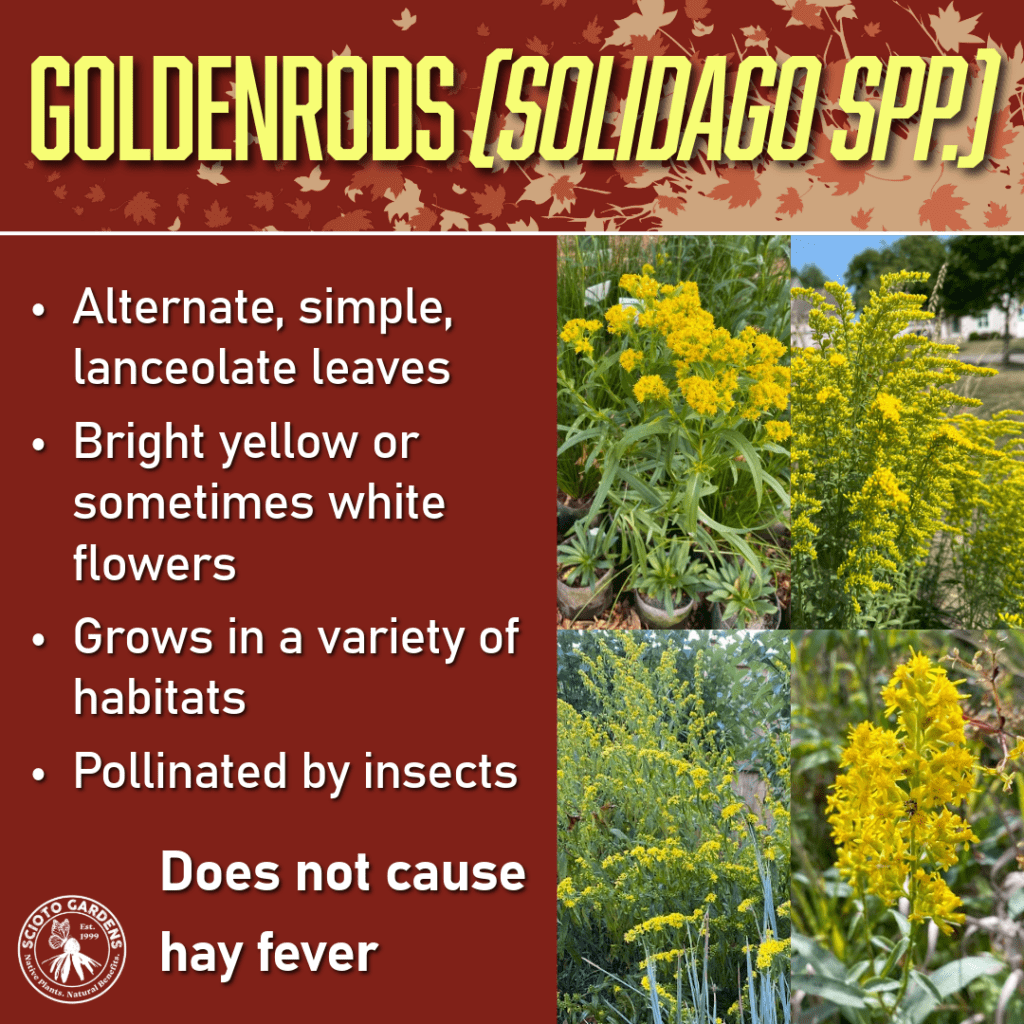
So how did goldenrods get the blame in the first place? The two groups of plants often inhabit the same spaces, and they bloom at the same time of year, so it’s easy to correlate seasonal allergies with the much more showy goldenrods. It’s also not impossible to be allergic to goldenrod, but it is less likely, and goldenrod pollen is much heavier and is not carried significantly by the wind. It’s worth mentioning that while ragweed is wind-pollinated, some insects may opportunistically eat the pollen, so it does have a place in our ecosystems.
Please share the good word about goldenrods to help clear their name, and consider adding some to your gardens this fall!
P.S.: We would like to apologize to answer D, horseweed (𝘌𝘳𝘪𝘨𝘦𝘳𝘰𝘯 𝘤𝘢𝘯𝘢𝘥𝘦𝘯𝘴𝘪𝘴), which is a native (and edible) pollinator plant in its own right that is often found along with the other species.
