
SHRUBS
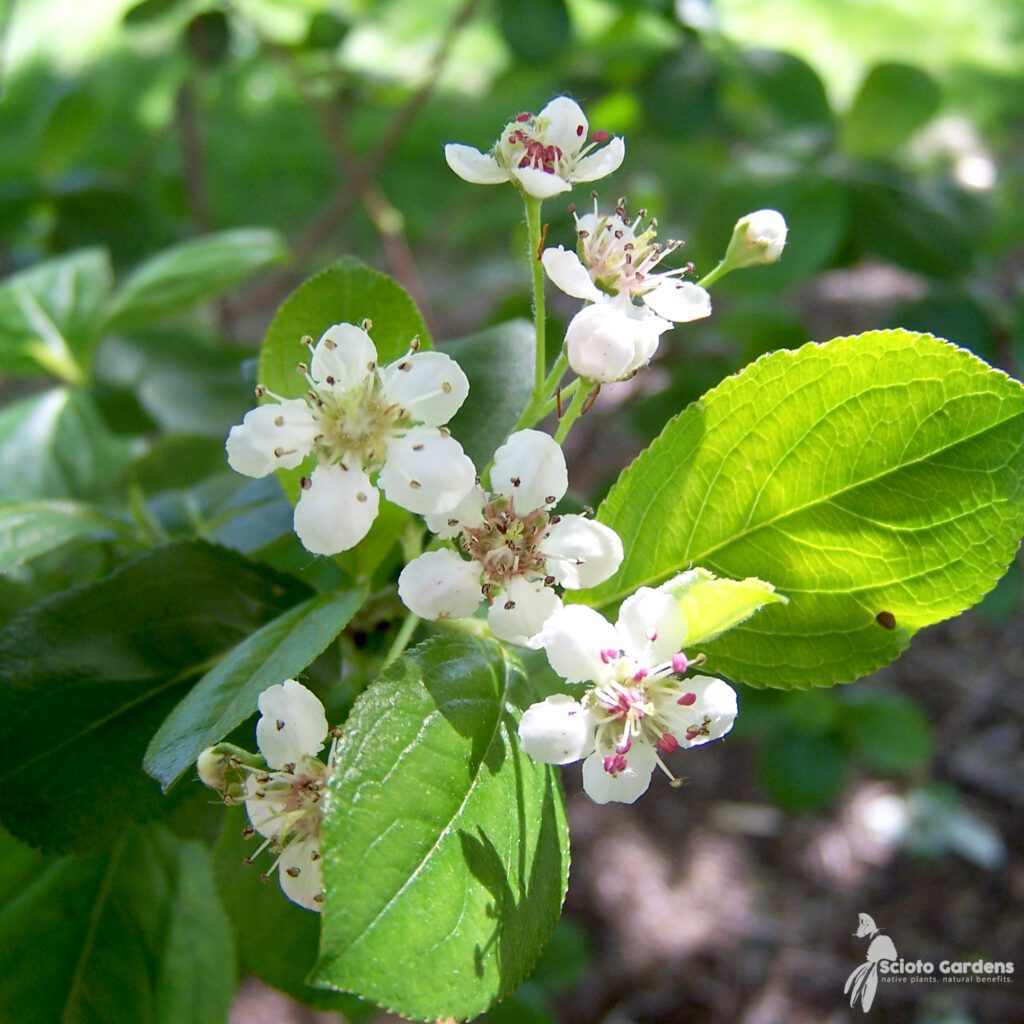
Black Chokeberries (Aronia melanocarpa)
Black Chokeberries are an Ohio native shrub that stands between 4 to 6’ tall. In early May they provide clusters of cheery white and pink flowers to help lift us out of the cool spring mornings. By midsummer, those flowers mature into enticing black fruits that, while very tart, can be used to make a variety of foods or drinks. Finally, in the coming months of fall their leaves turn a brilliant red. The berries can even last all winter depending on how much other food our local birds can find.
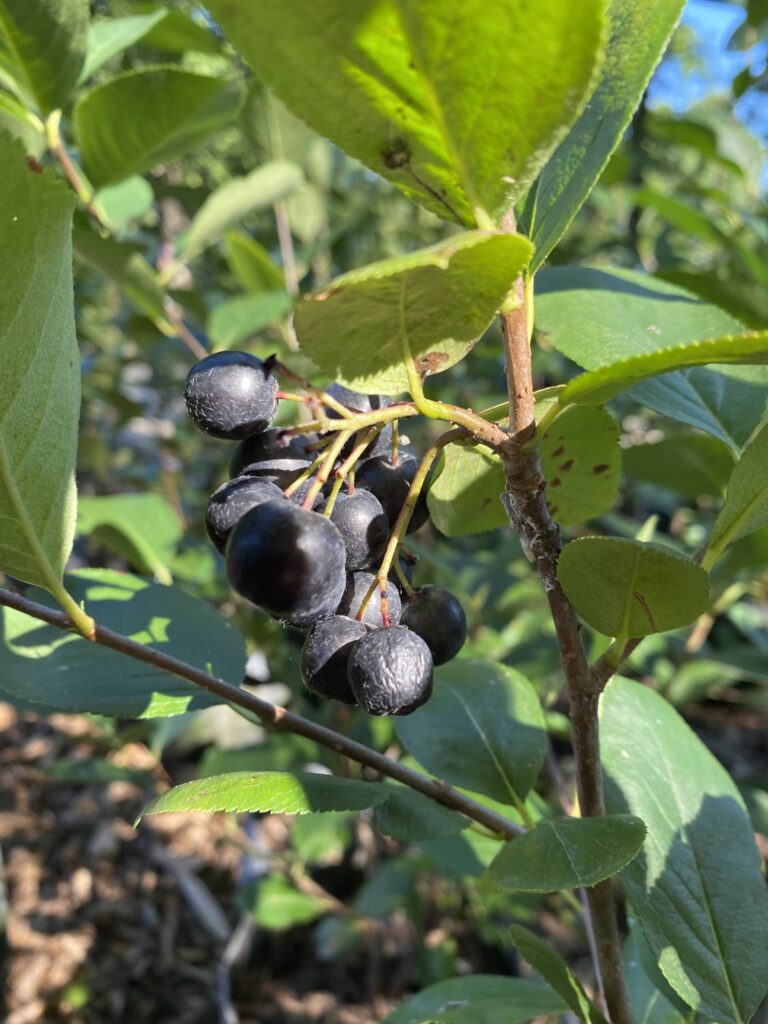
‘Viking’ Black Chokeberry
We have both the straight species of Black Chokeberries in stock as well as the ‘Viking’ cultivar (Aronia melanocarpa ‘Viking’). These shrubs prefer average to wet soil in full sun to partial shade.
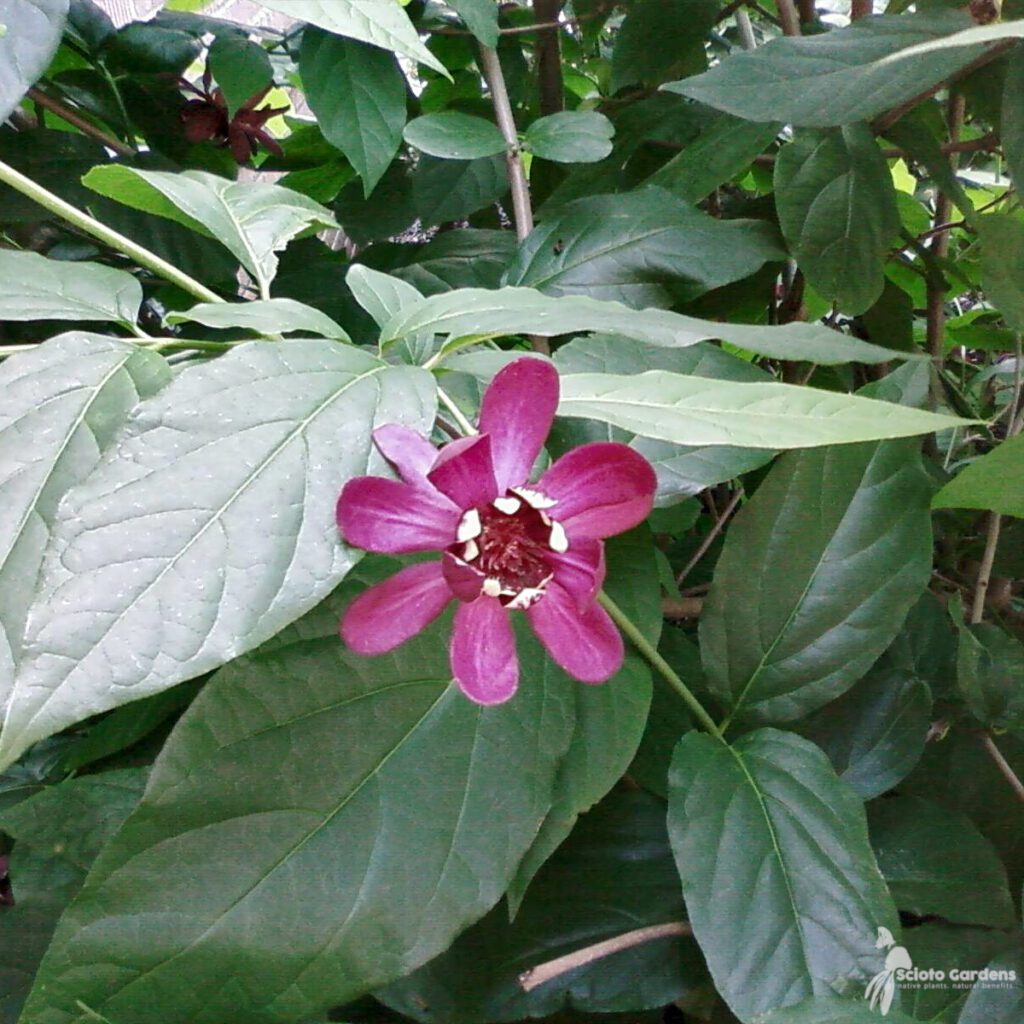
Sweetshrub (Calycanthus floridus)
Sweetshrub is a large shrub native to the southeastern states, though historically it ranged as far north as southern Ohio. Standing between 6-10’tall and 6-12’ wide, they prefer part to full sun with moist to dry soil. It will begin flowering in May and sporadically into June and July, filling the air with its sweet, fruity fragrance that gives this plant its common name. While it can move around in the wild by root suckers to find its ideal conditions, when cultivated in prime conditions they form a rounded, bushy specimen that fits right into shrub borders or foundation plantings.
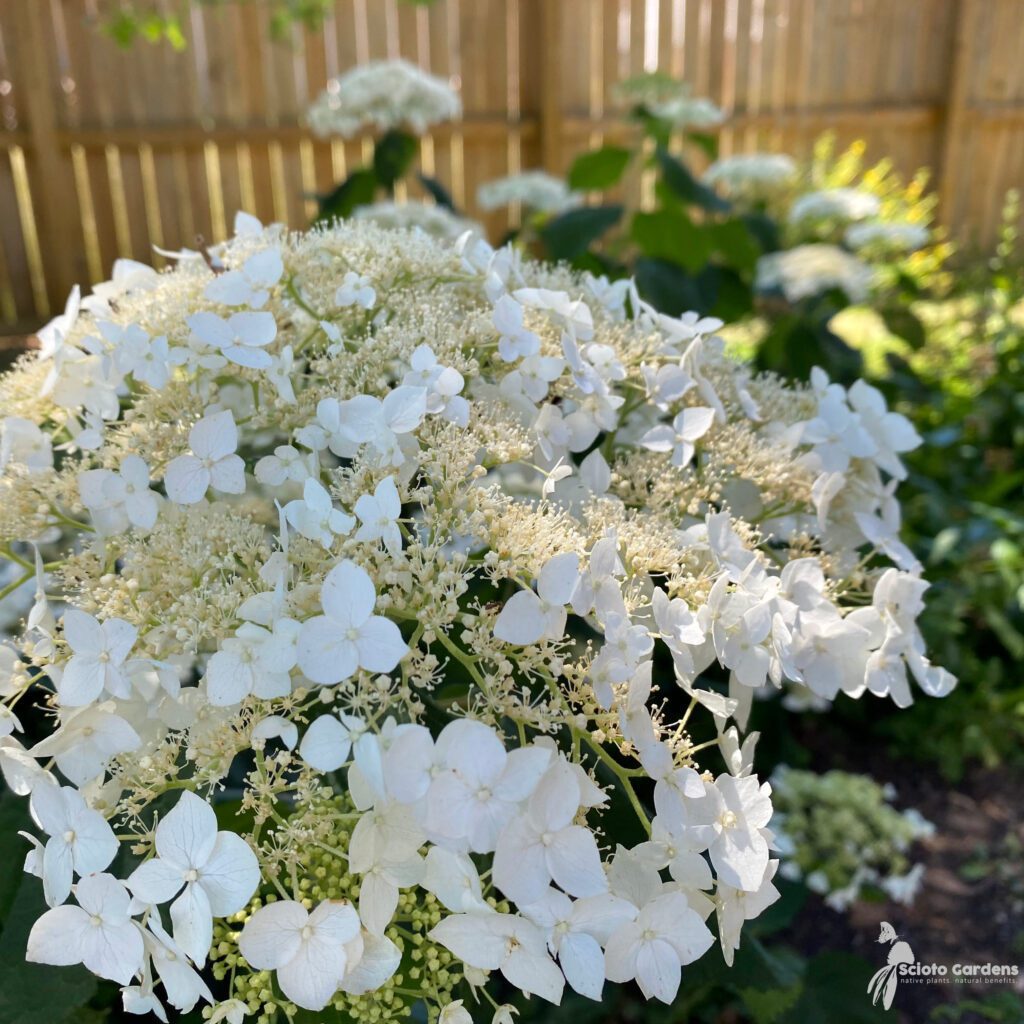
‘Haas’Halo’ Smooth Hydrangea (Hydrangea arborescens ‘Haas’ Halo’)
Smooth Hydrangea are a cultivar of our Ohio native Smooth Hydrangea that retains its bountiful flowers in addition to the showy white bracts. The upright stems can grow over 5’ tall but can be cut back in the spring nearly to the soil. Doing so increases the volume of blooms in the summer and keeps the overall to 3-5’. These hydrangeas are tolerant of a wide variety of conditions from full shade to even full sun when provided with enough moisture. While in bloom, the white inflorescences attract a wide array of pollinators including solitary bees, bumble bees, hoverflies, and more.
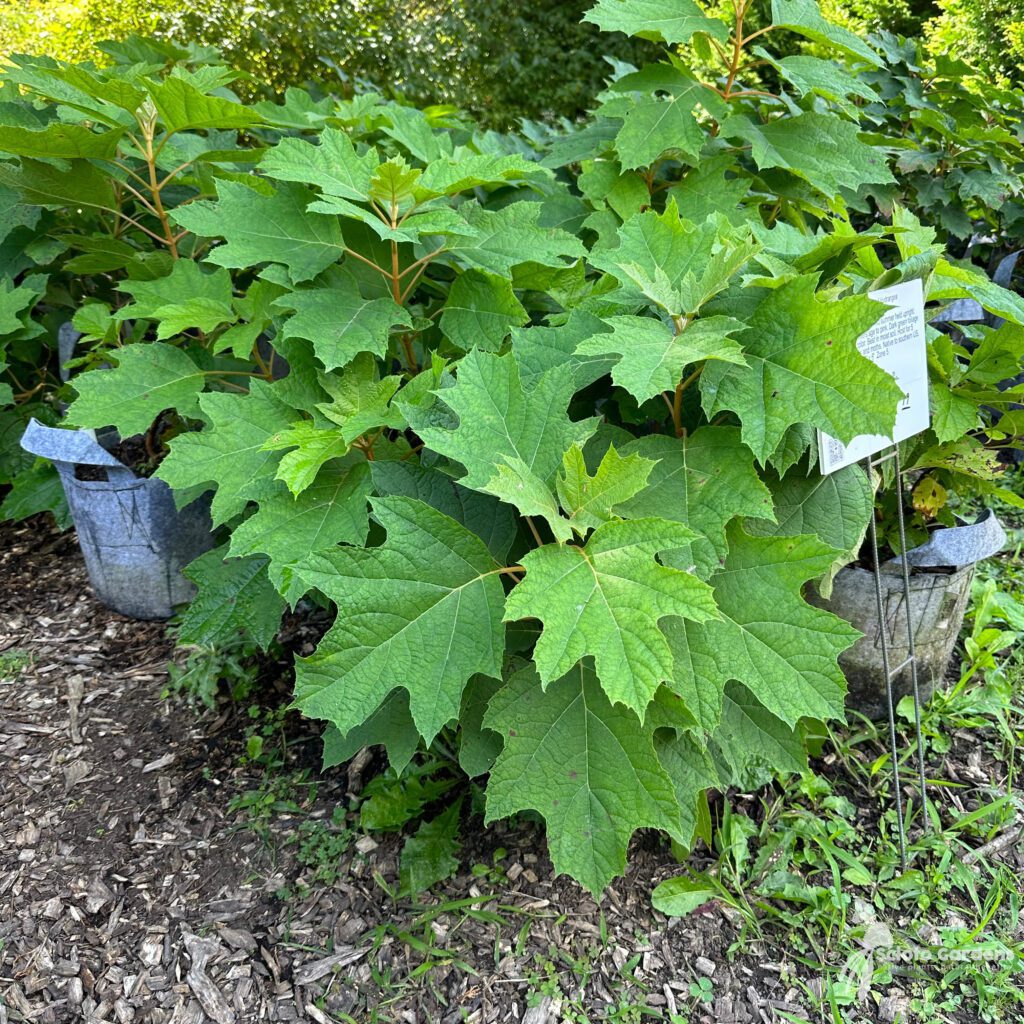
‘Ruby Slippers’ Oakleaf Hydrangea (Hydrangea quercifolia)
Oakleaf Hydrangea is a cultivated variety of the southeastern US native Oakleaf Hydrangea. This specimen is compact with extra large, upright flower inflorescences. Growing to 3-4’ tall by 3-5’ wide, pruning is rarely necessary, but is best done just after blooming if desired. Blooms occur on old wood. The deeply lobed, oak-like leaves turn from dark green to a brilliant wine red in the fall before being shed. Flowers start as abundant, pyramidal panicles of bright white before aging to a rosy pink and then a deep ruby red.
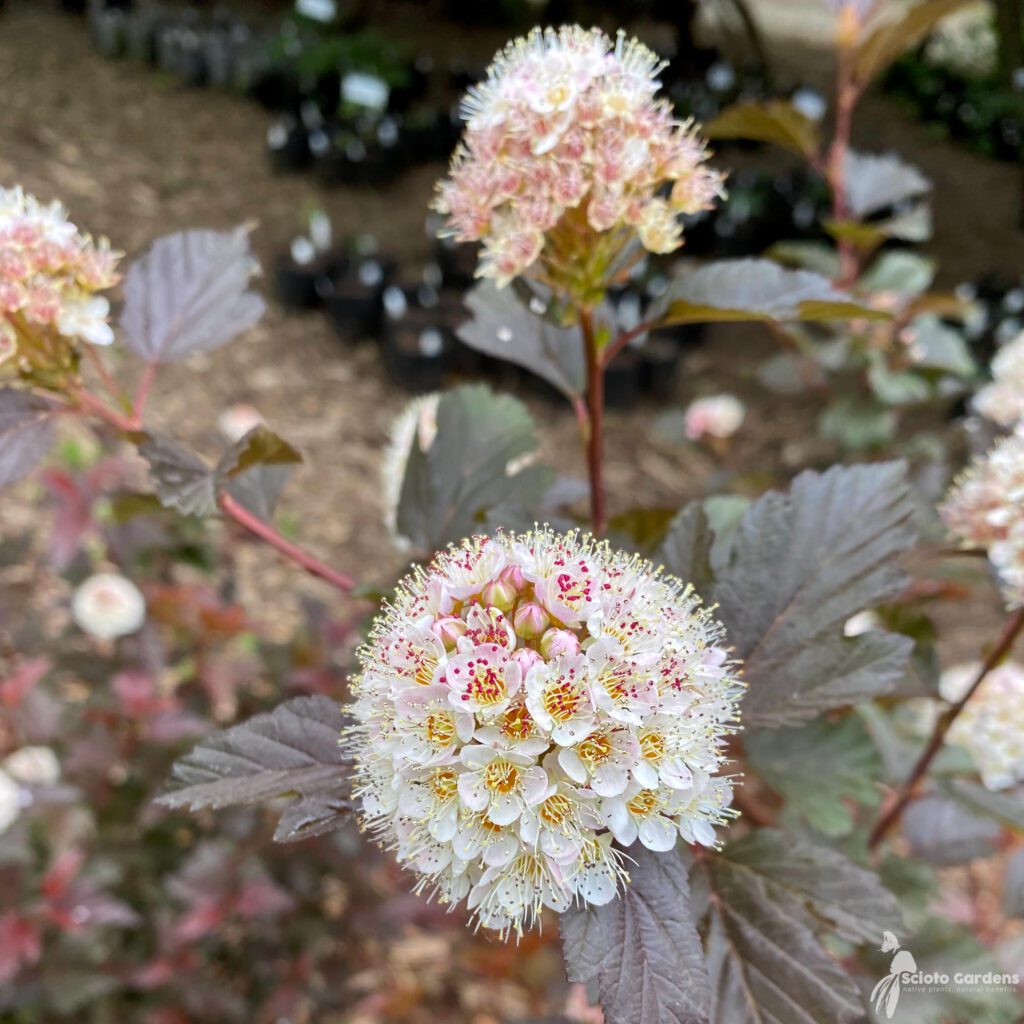
Lady in Red™ Ninebark (‘Tuilad’ Physocarpus opulifolius)
Lady in Red™ Ninebark is a cultivated variety of our Ohio native Ninebark. It has a more compact growth habit than the straight species, growing 3 to 5’ tall and wide. It also sports bold foliage that emerges bright red in the spring and matures into glossy chestnut, copper, and burgundy shades in summer. The dainty, dome-shaped clusters of pink-tinged flowers emerge in early summer and persist for 2-3 weeks. Exfoliating bark rounds out their 4 seasons of interest. Ninebark prefers part and full sun, with moist to dry soil, and makes an excellent replacement for non-native Japanese Barberry.
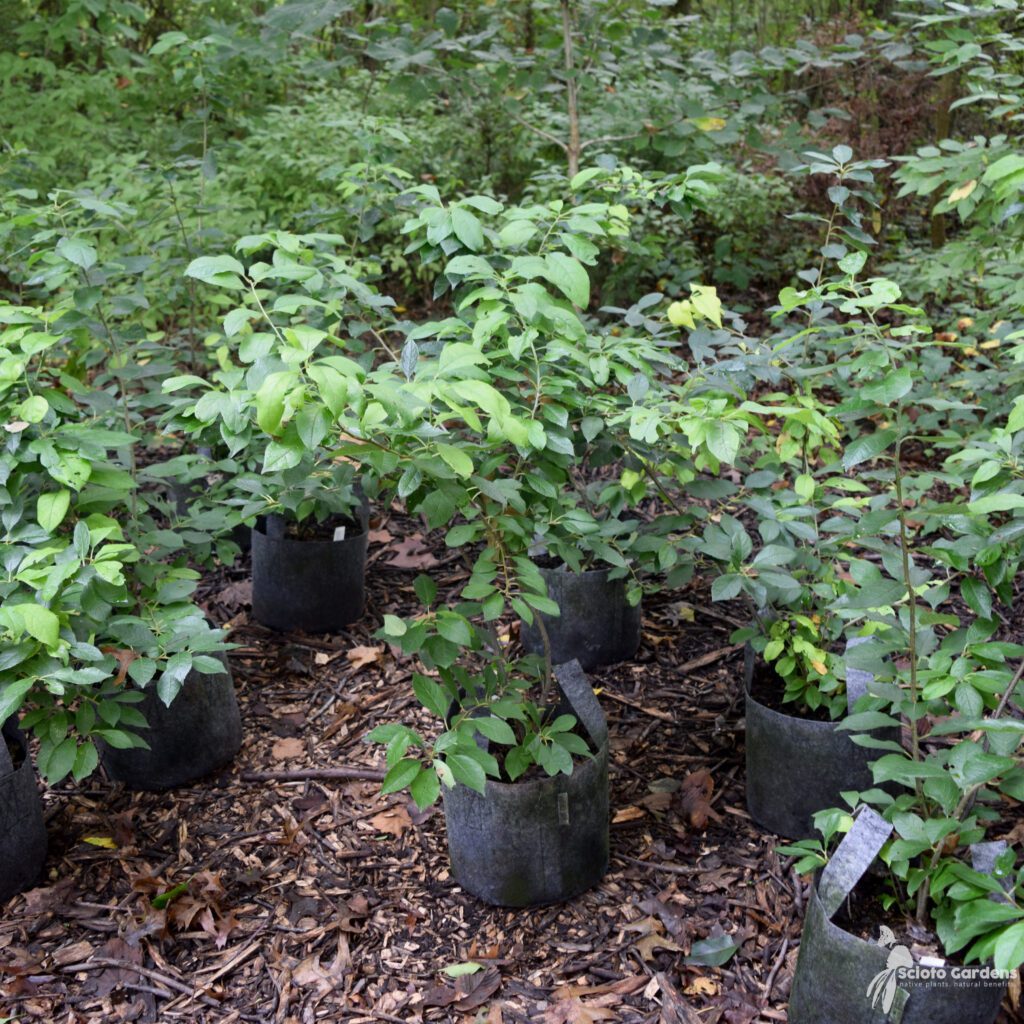
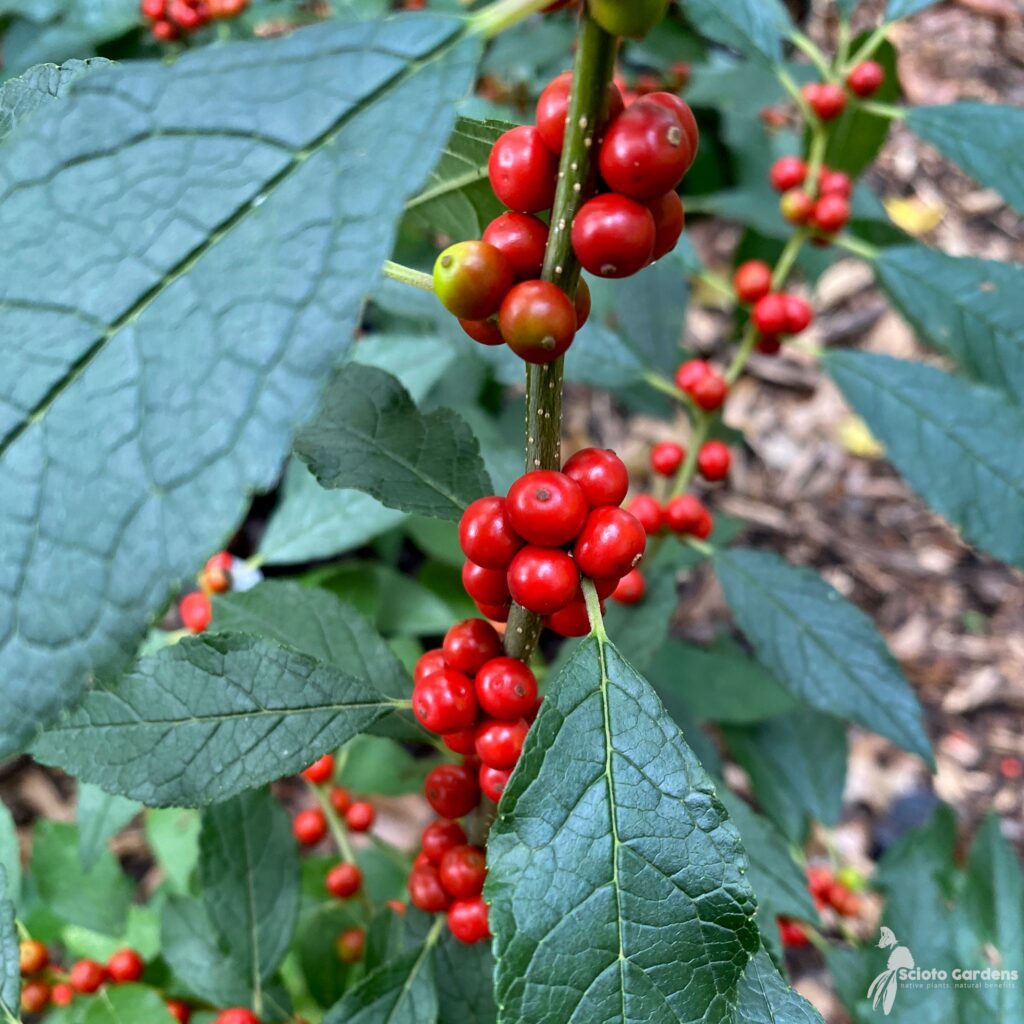
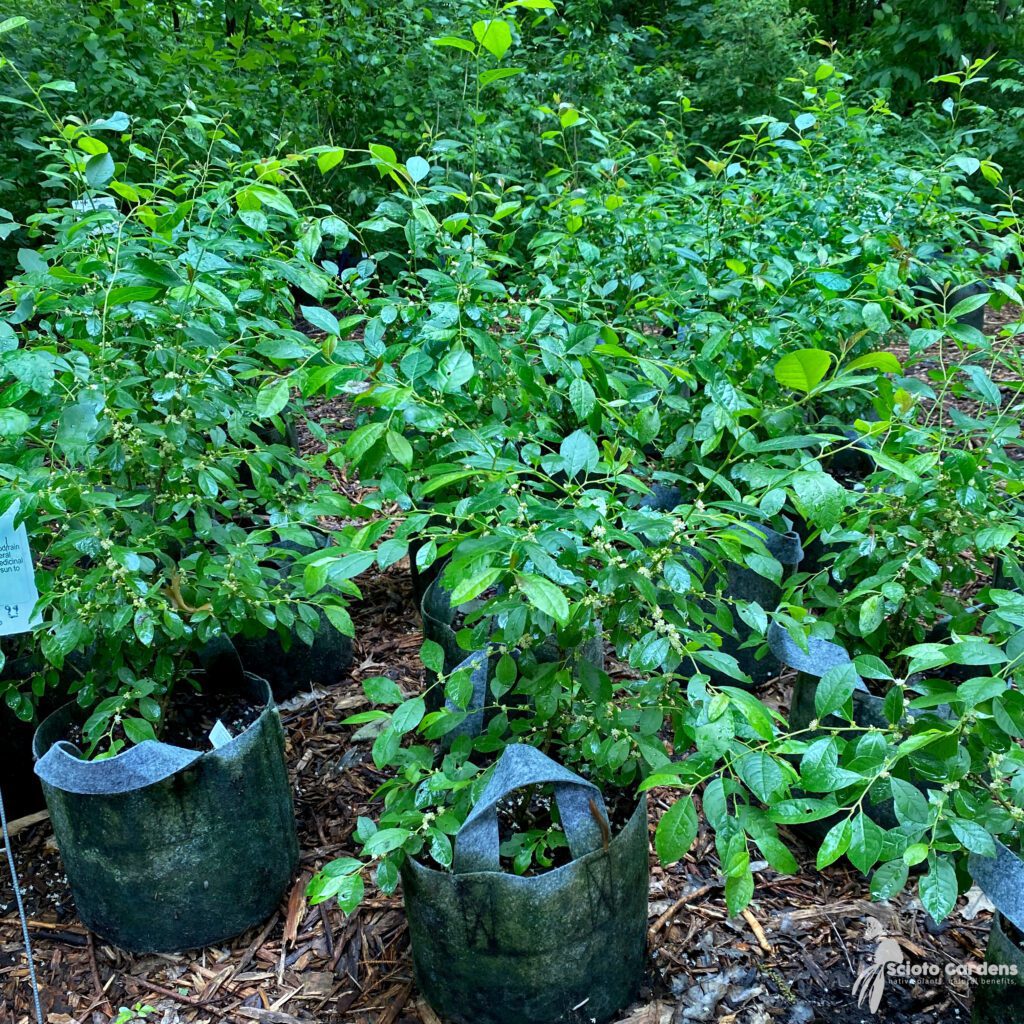
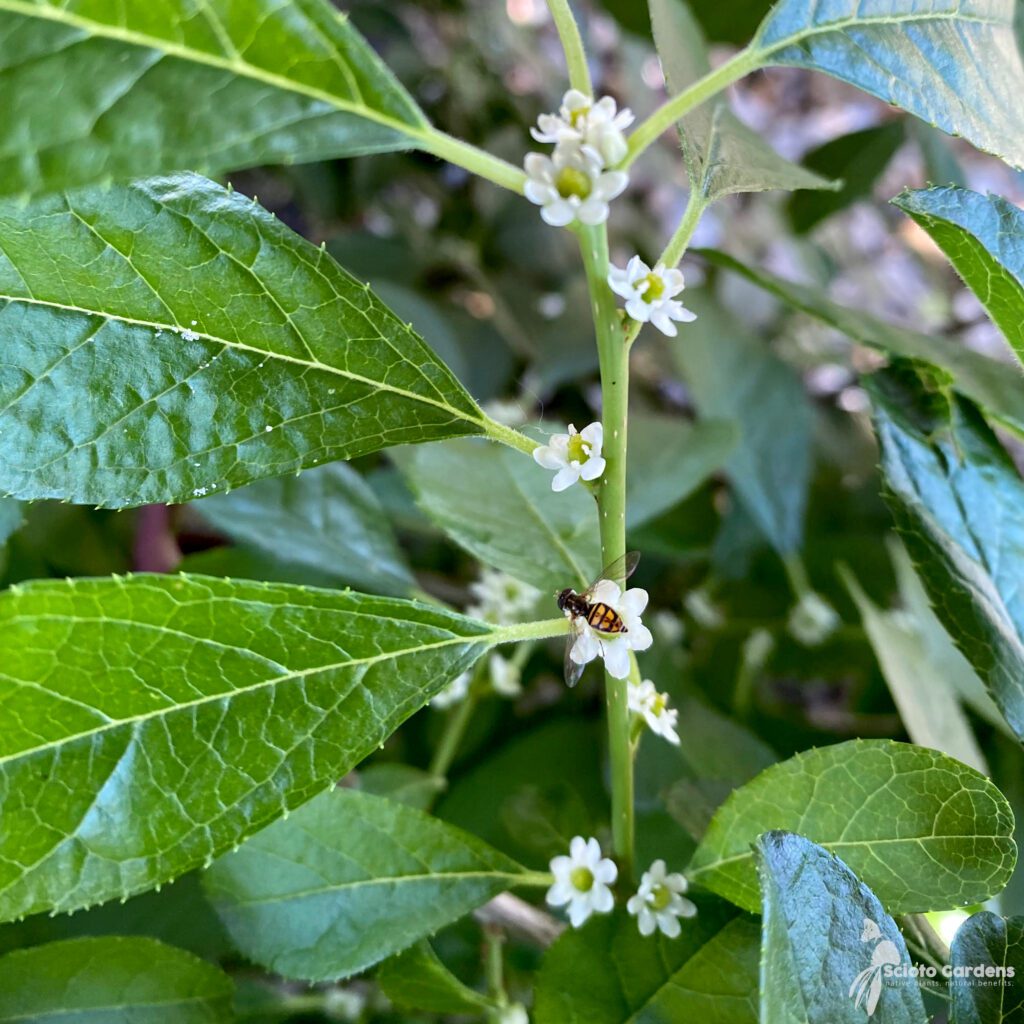
Winterberry Holly (Ilex verticillata)
Winterberry Holly have such great winter interest with their bright red berries. Winterberries are a dioecious plant (with male and female flowers on separate plants), and we currently have two sets of cultivars that we recommend pairing together:
‘Winter Red’ & ‘Southern Gentleman’
The first pair, ‘Winter Red’ and ‘Southern Gentleman,’ each grow around 6-8’ feet tall and wide in an upright, clumping form. White flowers on both sexes will delight small pollinators in late spring, and the females (‘Winter Red’) will develop long-lasting red berries that persist long into the winter. At minimum, one male can provide pollen for up to 6 female plants as long as it is planted within reasonable flying distance (around 50 feet) for the small bees and other insects that pollinate them.
‘Red Sprite’ & ‘Jim Dandy’
The second pair, ‘Red Sprite’ and ‘Jim Dandy,’ are more compact at around 3’ tall and wide each. Just like the first pair, at least one male (‘Jim Dandy’) should be placed within 50 feet of up to 6 female plants for them to bear fruit. All of our Winterberry Hollies should be planted in part-to-full sun in wet to moist soil, and do well in poorly drained areas or pond margins.
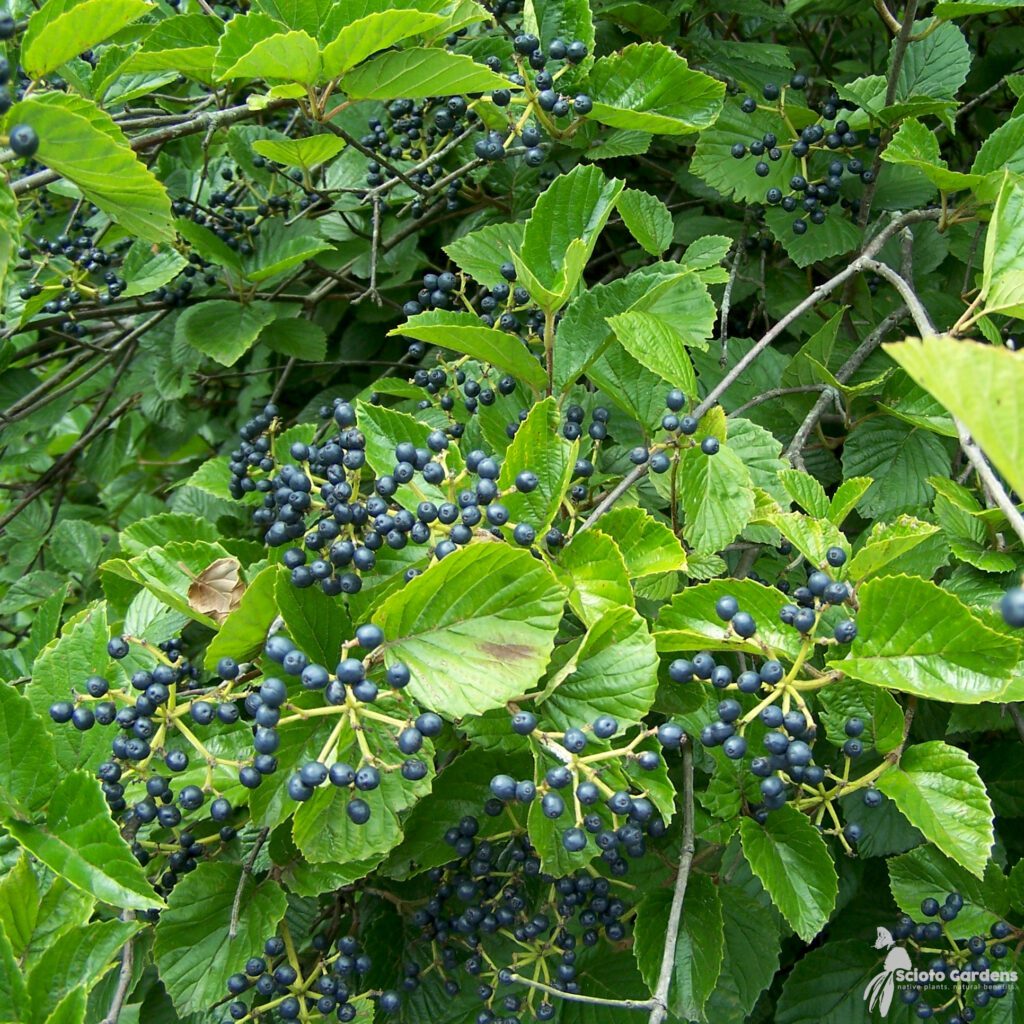
Arrowwood Viburnum (Viburnum dentatum)
Arrowwood Viburnum
is a dependable native shrub that is pest free and highly disease resistant. Growing anywhere from 6-15’ feet tall and wide based on the conditions, they make great screens and hedges. New shoots are remarkably straight, which allowed indigenous peoples to use them as arrow shafts. Flowers emerge in May and June, leading to beautiful blue-black fruit that ripens in September and October. The lustrous green foliage turns brilliant yellow and red shades in the fall as well. While Arrowwood Viburnums do not need multiple individuals to fruit, fruit production will improve by planting two or more in the same area. In addition to the straight species, we also have the Chicago LustreⓇ cultivar (Viburnum dentatum ‘Synnestvedt’) that features heavier crops of fruit and glossy foliage. Arrowwood Viburnums prefer part sun to full sun, with moist to dry soil.
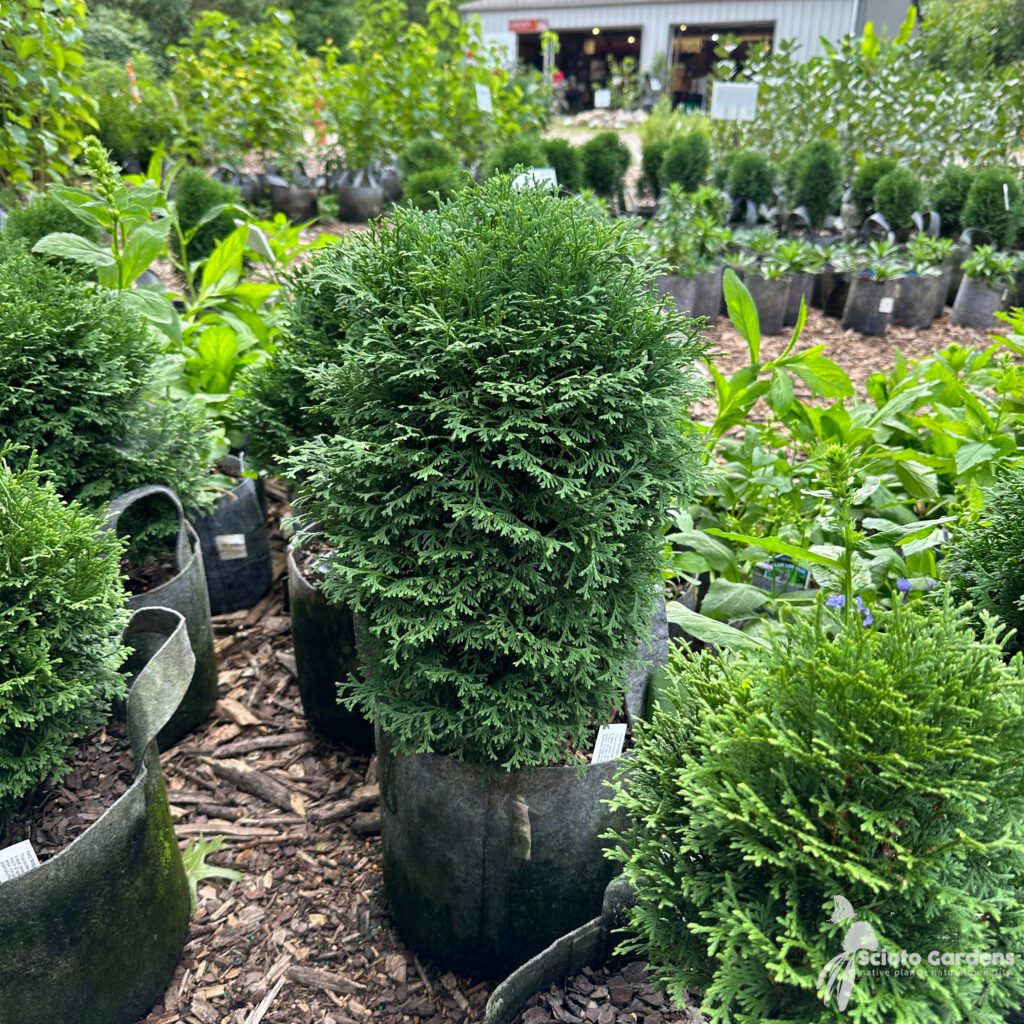
‘Hetz Midget’ American Arborvitae (Thuja occidentalis ‘Hetz Midget’)
‘Hetz Midget’ American Arborvitae is a coniferous evergreen that has been cultivated to create a low-growing shrub. Growing 3-4 feet tall and 4-5 feet wide, they have a dense and globular structure that mimics the shape of boxwoods. Their foliage consists of flattened scale-like leaves, and may host the caterpillars of over 30 species of moths and butterflies. These slow-growers prefer full sun but can tolerate some shade as well. It is a good choice for low-maintenance plantings and adds a tidy, modern look to the landscape.
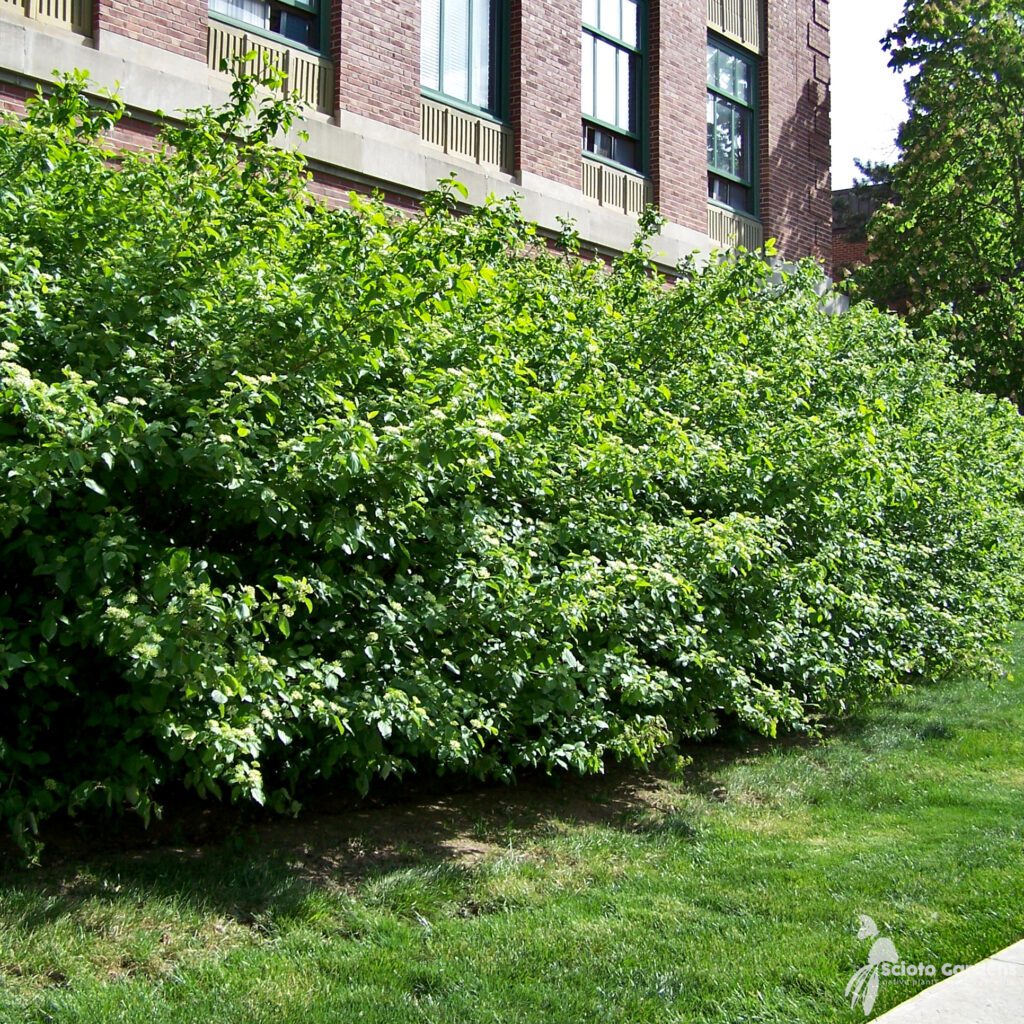
Gray Dogwood (Cornus racemosa)
Gray Dogwood grows 4-5’ tall and 10-15’ wide, with exceptional individuals growing to 10-15’ tall when sited well and with no competition. They are a tough, wild shrub that can spread vigorously by suckering to form colonies, and are great assets for large naturalized areas where you need something that can compete with invasives like Amur Honeysuckle. Its root system is shallow and fibrous, meaning it is also great for comparing soil erosion. Milky-white fruits have a high fat content and are therefore a preferred food source in late summer and fall for our migratory songbirds and small mammals. Very adaptable, they can tolerate almost any condition from full sun to full shade, and wet to dry soil.
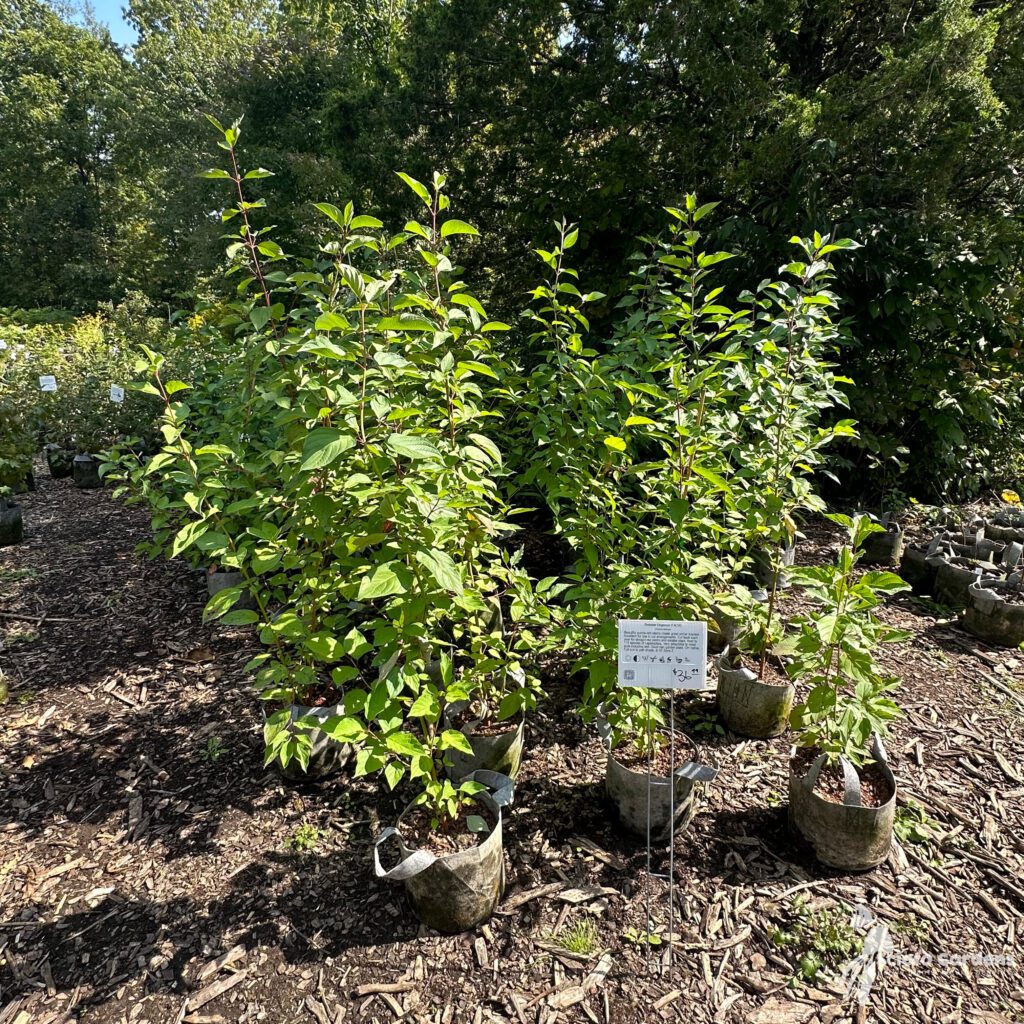
Red-twig Dogwood (Cornus sericea)
Red-twig Dogwood is a large, multi-stemmed native shrub with awesome winter appeal. The bright red stems stand out vividly against the winter landscapes, and really come alive surrounded by snow. While it is a wild shrub with a sprawling and loose form, it can handle hard pruning, which also helps both its shape and winter color. It can be cut almost to the ground for straight, colorful regrowth. This dogwood is another with a fibrous root system that is great for erosion control. Like the gray dogwood, the fruit is a favorite food for birds, and the foliage of Cornus species host at least 98 species of Lepidoptera (moths and butterflies). Growing around 7-9’ tall and wide, Red-twig Dogwoods prefer part or full sun with wet to average soil conditions.
TREES
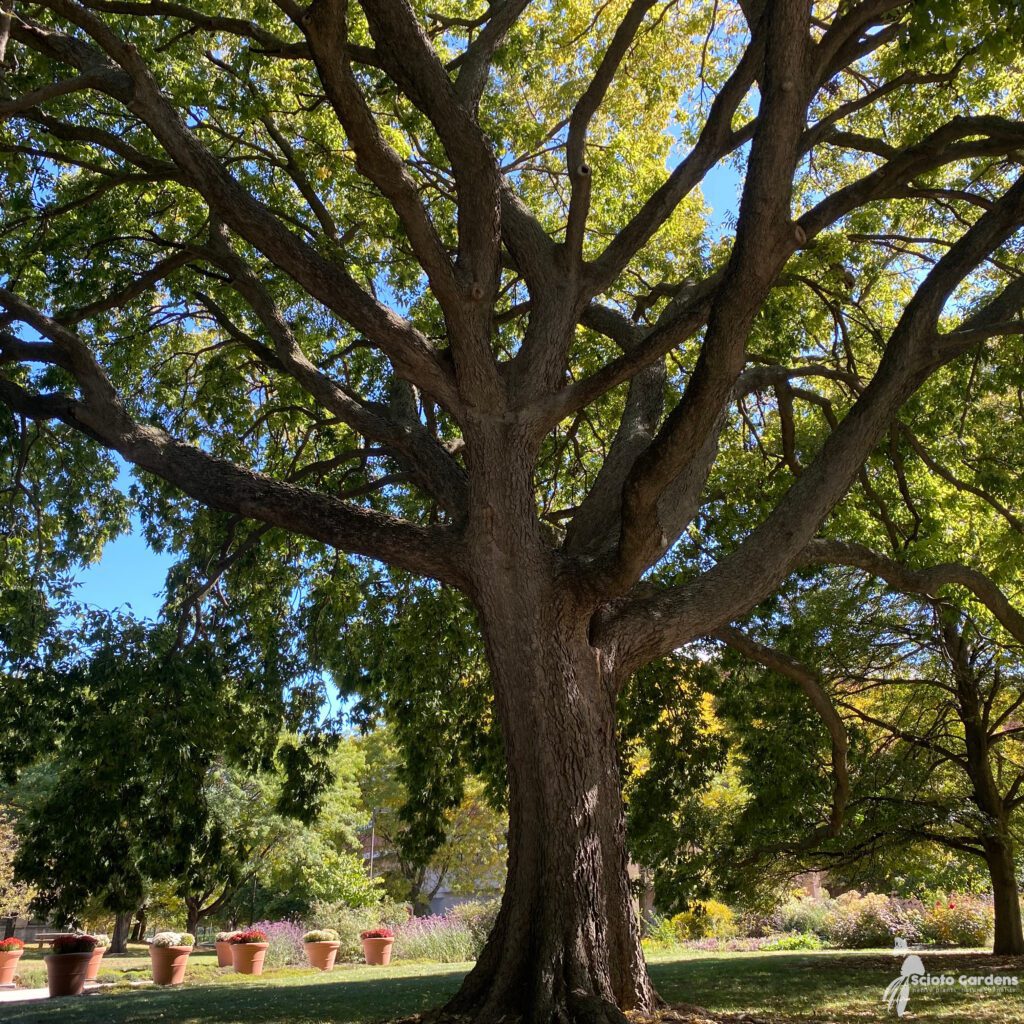
Common Hackberry (Celtis occidentalis)
Common Hackberry is a tough and adaptable medium-sized shade tree that provides a number of services for our local wildlife. The flowers are an inconspicuous green color and are pollinated by the wind, but the resulting berry-like drupes are a great food source in the winter for birds and mammals. The foliage is also host for at least 43 species of moths and butterflies, including the Hackberry Emperor, Question Mark, and American Snout butterflies. They can tolerate a wide range of soil conditions from wet to dry, and acidic to alkaline, and do well in sun or part-shade. Growing up to 40-60 feet tall, Hackberries make a great replacement for deceased Ash and Elm trees in the landscape.
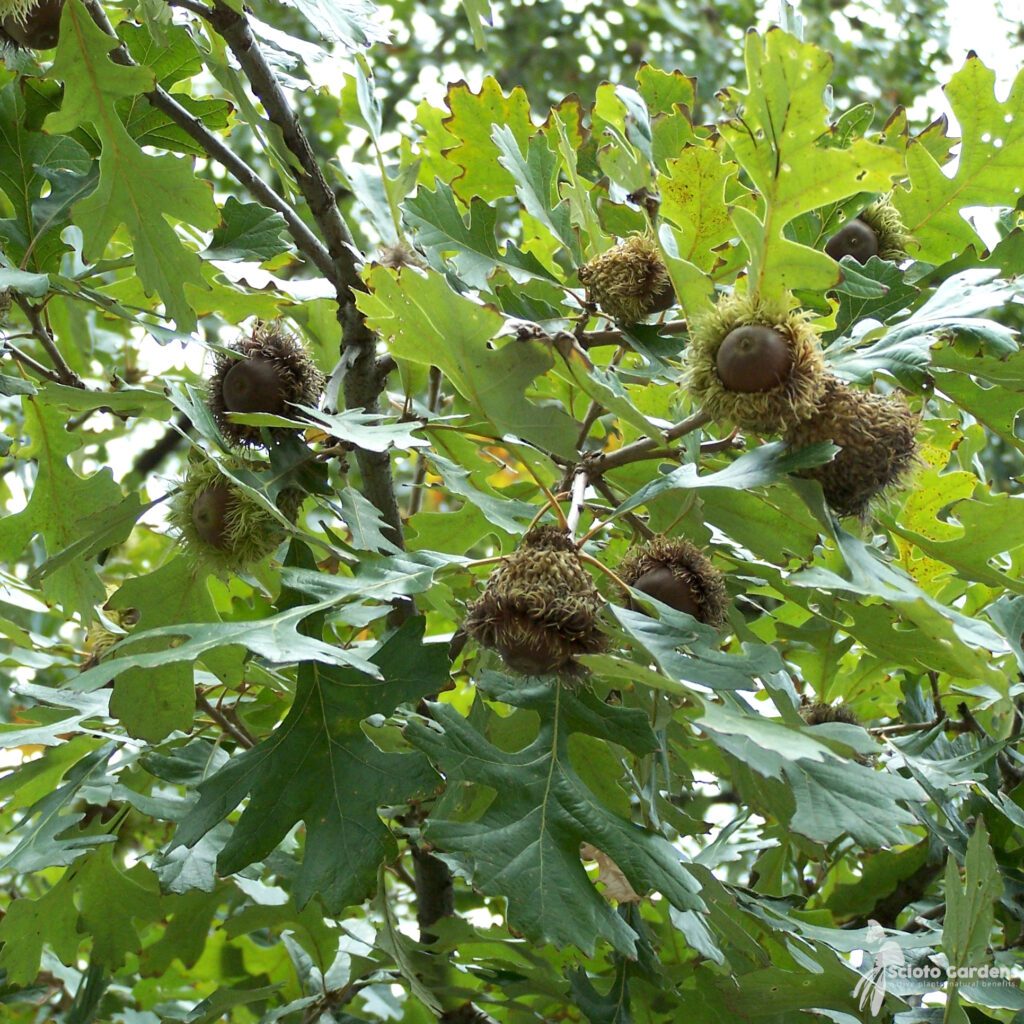
Bur Oak (Quercus macrocarpa)
Bur Oak is a majestic OH native, and one of our largest native oaks growing over 70’ tall by 70’ wide. The large, sweet acorns have distinctive fringed caps, and the leaves are large with rounded lobes. These trees are salt tolerant and grow in dry to moist soils, in full sun to part shade. Young Bur Oaks have an upright growth habit that broadens with age, creating a canopy that can become as wide as the tree is tall. Bur Oaks require full or part sun with moist to dry soil. Oaks are one of the most important host plants for Lepidopterans, hosting 534 species.
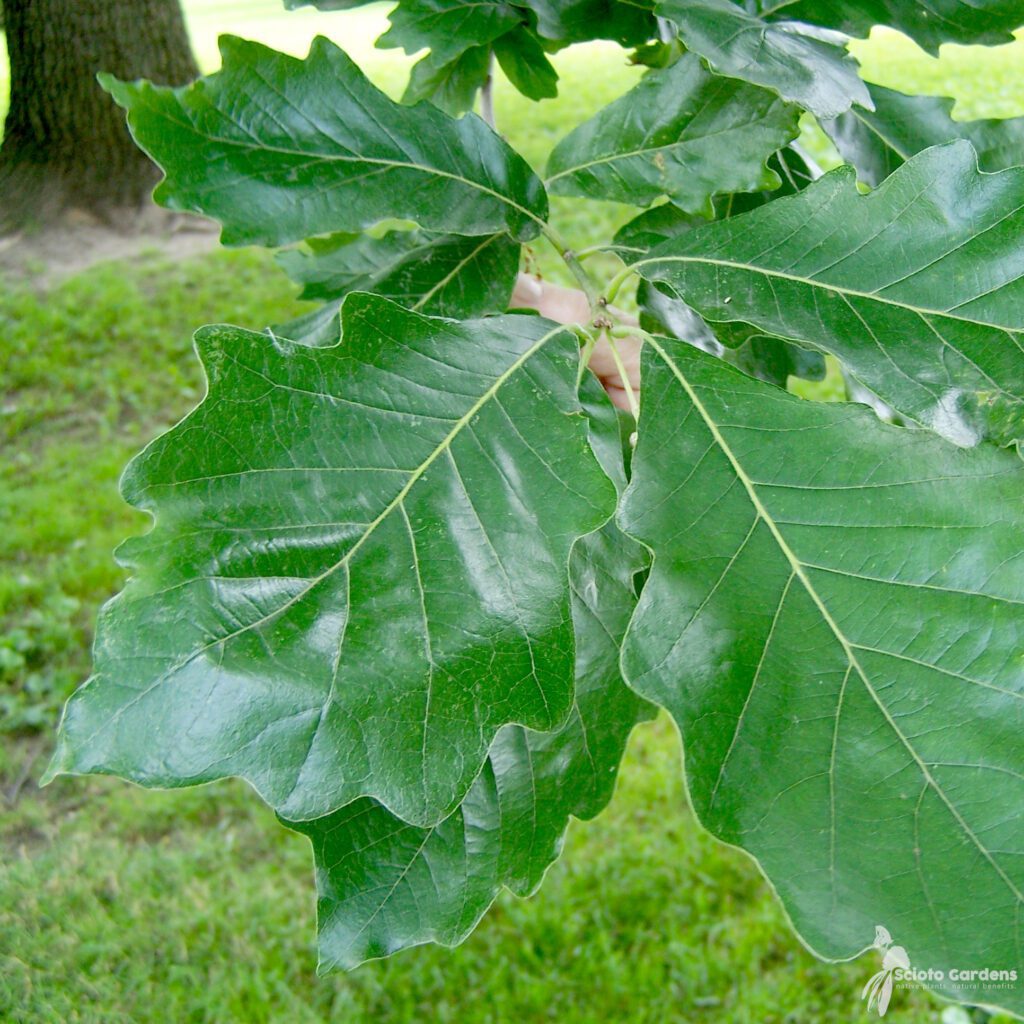
Swamp White Oaks (Quercus bicolor)
Swamp White Oaks are also important plants for wildlife of all types. In addition to hosting 534 species of Lepidopterans, their mildly bitter acorns provide food for numerous wildlife including Red-bellied Woodpeckers, Wild Turkeys, and all four of our native squirrel species. Swamp White Oaks are typically found in low, acidic, and swampy soils, but are fine with average moisture as well, and prefer part or full sun. They can grow up to 50’ to 60’ tall and wide, so are a little smaller than their Bur Oak cousins.
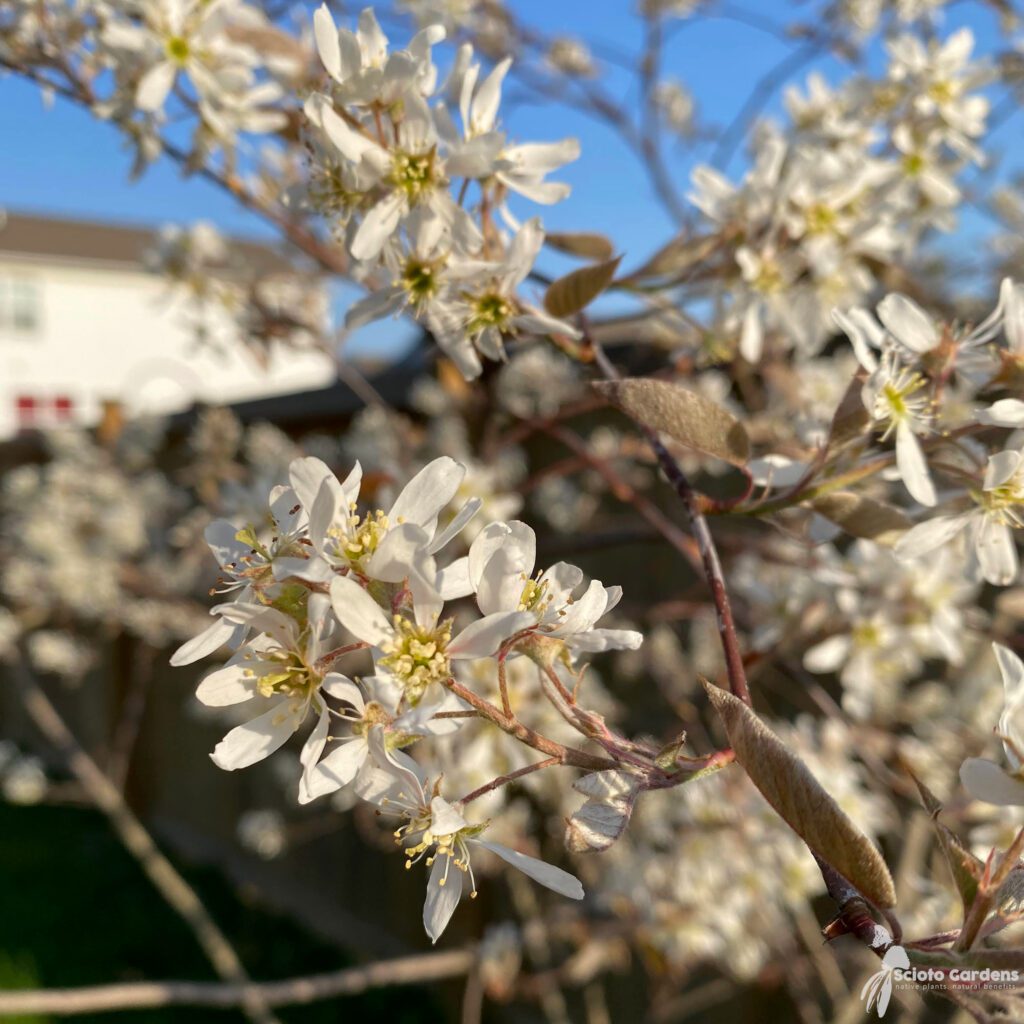
Allegheny Serviceberry (Amelanchier laevis)
Allegheny Serviceberry grows around 15-25’ tall, and are true triple-utility trees. White blooms in early to mid spring provide food for pollinators while giving a similar appearance to the aforementioned pear. By June, those flowers are replaced by delectable red berries that are adored by birds and humans alike and taste similar to blueberries. Finally, their foliage is a food source for at least 92 species of moth and butterfly caterpillars. Those leaves also turn brilliant yellow, orange, and red in autumn. They prefer part sun with moist, well-drained soil but can adapt to drier soils as well. Full sun should be avoided if the site is dry, however.
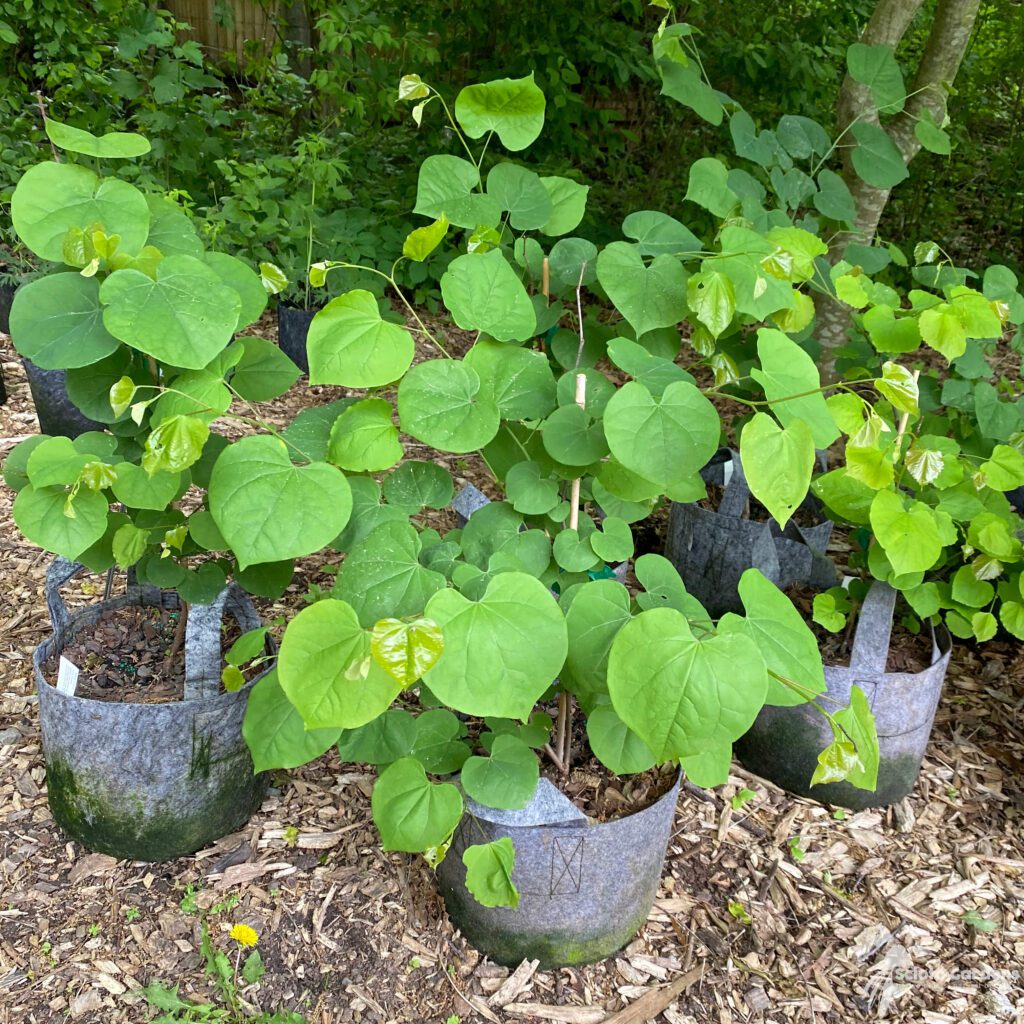
Eastern Redbud (Cercis canadensis)
Eastern Redbud is an understory tree growing approximately 20-30 feet tall, Redbuds sport rosy pink flowers instead of white. These blooms provide pollen and nectar to our native bees and other insects. Broad, heart-shaped leaves fill in after flowering, which turn bright yellow in the fall. By winter, Redbuds show off their elegant form full of dangling papery seed pods which are eaten by many of our resident and migratory birds. Being a member of the Legume family, these trees fix nitrogen into the soil, making it a useful addition for garden settings or pretty much anywhere it is planted. Like Serviceberries, they prefer part shade with average to moist soil, but are very adaptable and can tolerate full sun as well.
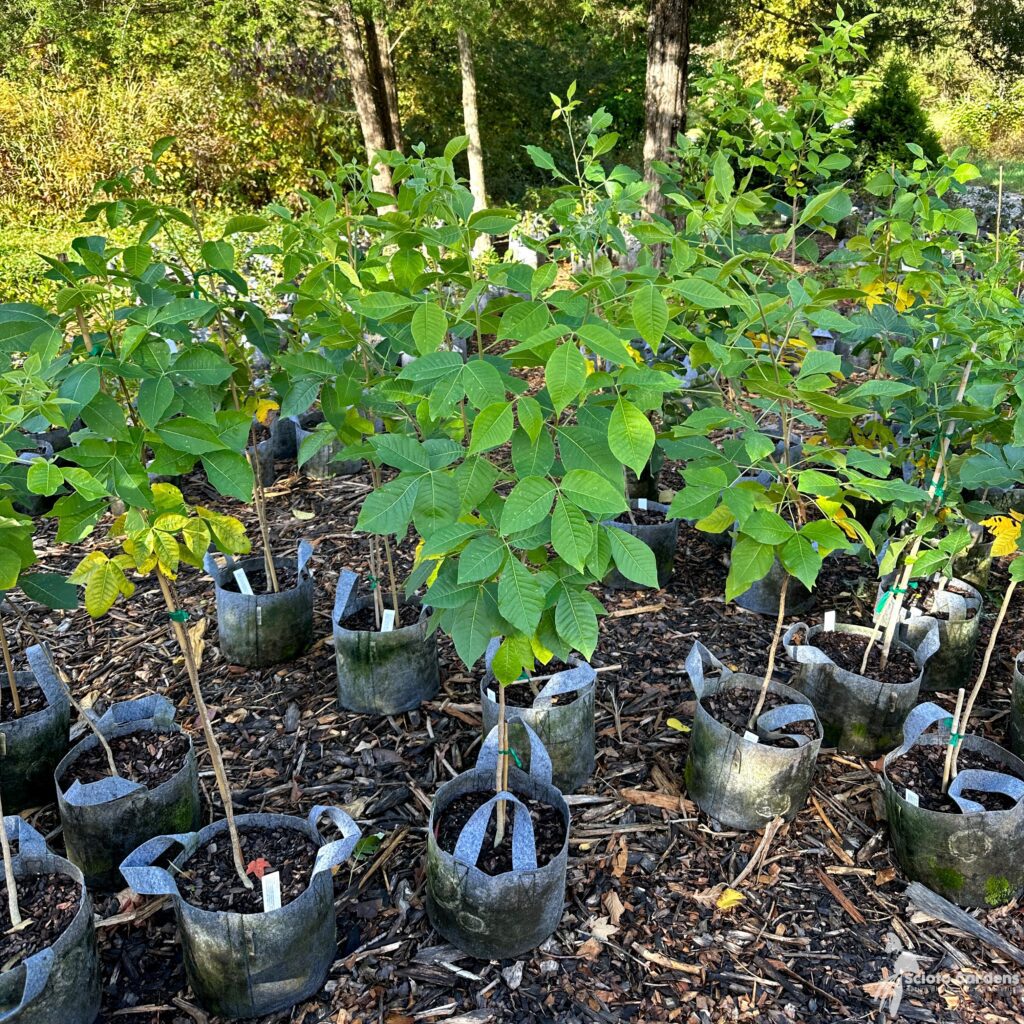
Hop Tree (Ptelea trifoliata)
Hop Tree, also known as Wafer Ash, is an uncommon native small tree or shrub. Its claim to fame is being host to our largest butterfly, the Giant Swallowtail (Papilio cresphontes), but it has so much more to give in addition. They can handle full sun to full shade, and moist to dry soil, and grow around 15-20’ tall and wide, but often smaller. Regardless of their sun and moisture availability, they do need a well-draining site to thrive, but are otherwise very adaptable. The root system is woody and spreading but does not tend to sucker. Greenish-white flowers bloom in May and June with sweet nectar that attracts all sorts of butterflies and other insect pollinators. The name of “Hop” tree comes from the flattened, papery, hop-like samaras that have been used as a substitute for hops in brewing beer.
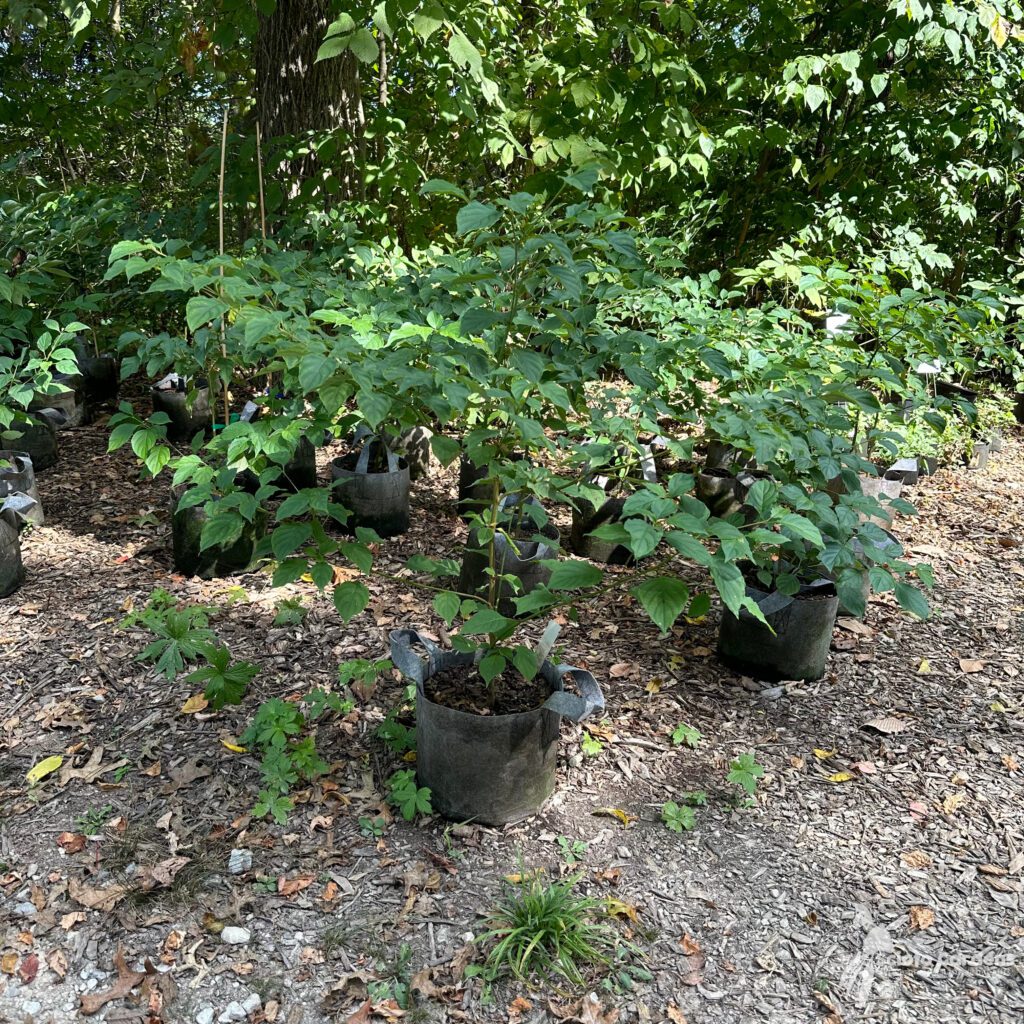
Pagoda Dogwood (Cornus alternifolia)
Pagoda Dogwood is an elegant small tree with distinctive tiered, horizontal branches. The only dogwood with alternate rather than opposite leaves, they grow between 15-25’ tall and 20-30’ wide. White flowers emerge in May and June that last for 2-3 weeks, offering both pollen and nectar with a pungent, sweet fragrance. Greenish-pink fruits follow, maturing into a blue-black color in summer. Dogwoods host up to 118 species of moth and butterfly caterpillars, and the high-calorie fruit feeds our migratory songbirds. Pagoda Dogwoods prefer moist, cool soil in order to thrive. Afternoon sun and drought can lead to stress. The architectural form of the tiered branches makes for a striking specimen planting, lovely by a water feature or stretching gracefully over a patio.
Sycamore (Platanus occidentalis)
Sycamore is a majestic and massive mainstay of our Ohio landscapes. One of the tallest native deciduous trees, they can grow between 75 and 100’ tall and wide and bear striking white and gray defoliating bark. Their typical homes are in bottomlands, floodplains, and riverbanks with deep fertile soil. In cultivation, they prefer moist soil and full or part sun, and they grow quickly when well-sited. Such majesty is difficult to contain, and they are not a tree for small spaces or for along roads (as they have no salt tolerance). Their ecological impact is high, however, and their structure alone makes valuable homes for all manner of bird and climbing mammals. The foliage too hosts at least 45 species of Lepidopterans.
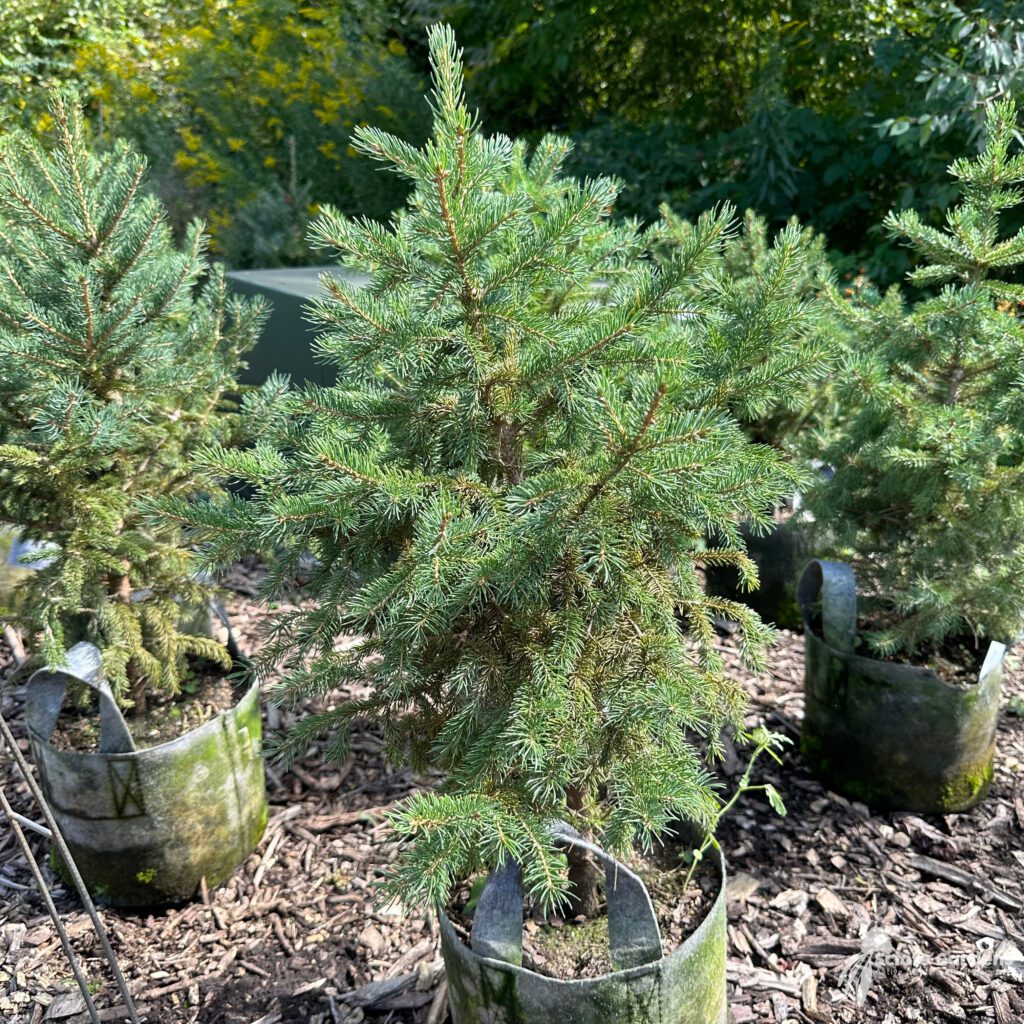
Black Hills Spruce (Picea glauca densata)
Black Hills Spruce is a dense, conical evergreen native to the northern US and Canada. While not an Ohio native, it is a tough spruce that can handle the clay and conditions of the Midwest, making it an alternative to the non-native Norway Spruce or Colorado Blue Spruces which are susceptible to disease and on the decline in our region. In Ohio, they’ll top out at 40’ tall in about 40 years’ time, though the national champion tree is 103’ tall! Full sun to part sun is what it prefers, with moist to average soil. They are deer tolerant and their dense foliage provides excellent winter shelter and nesting sites for wildlife.
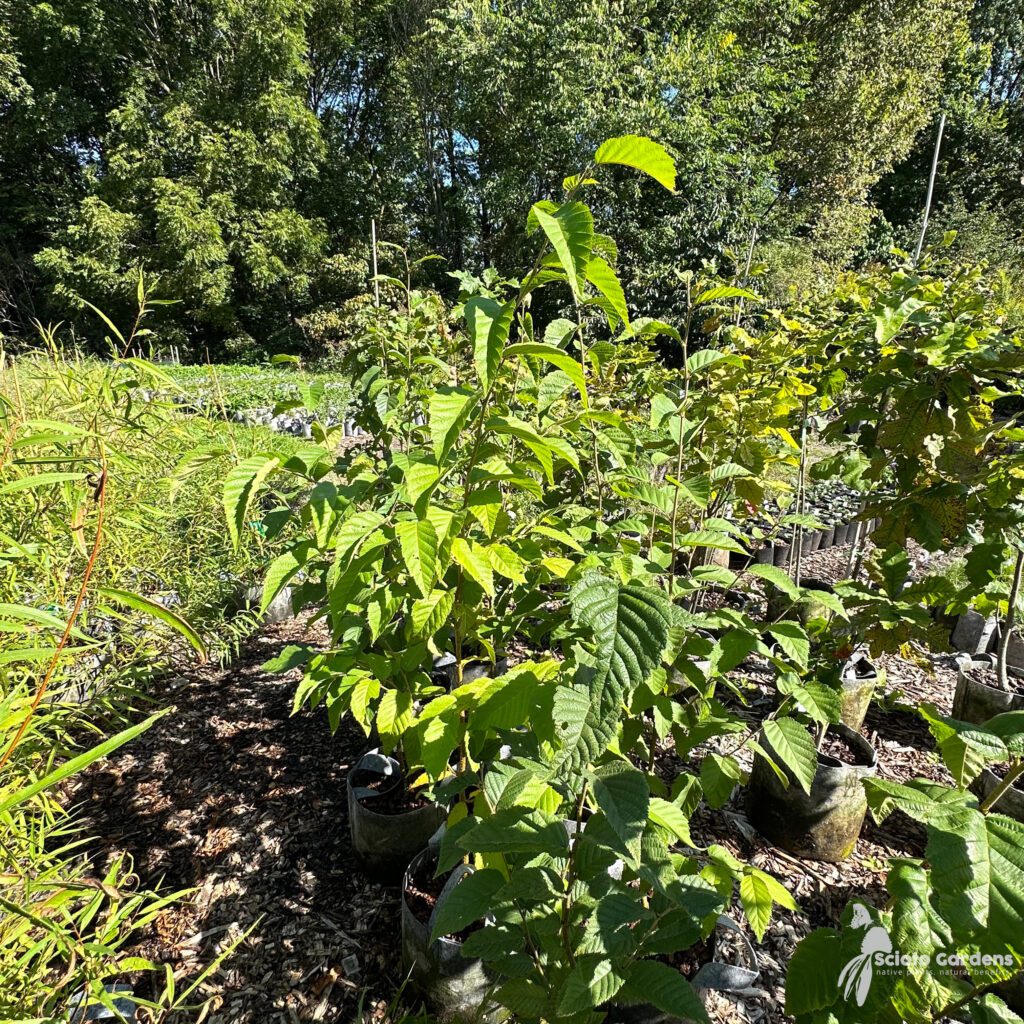
Yellow Birch (Betula alleghaniensis)
Yellow Birch is the largest birch in North America and an Ohio native. In the wild, it has been recorded growing 100’ tall, but 60-75’ by 20-30’ wide is more typical in cultivation. They prefer part sun or full sun, but with moist, cool soil with slightly acidic pH. Flowers are wind-pollinated, and the resulting seeds are cherished by many of our songbirds and squirrels. Birches are host to at least 284 species of moths and butterflies and provide a veritable feast for insectivorous birds too. The peeling, bronzy bark of Yellow Birch lends to its winter appeal, and the beautiful golden-yellow fall color adds even more year-round interest.
September 2023 Newsletter
